The Amendment That Was Supposed to Solve a Crisis, Not Create One
The 25th Amendment was ratified in 1967 with the best of intentions. Following the trauma of John F. Kennedy's assassination and the constitutional uncertainty that followed, Congress sought to clarify the murky waters of presidential succession and temporary incapacity. What they created instead was a constitutional time bomb with a fuse that gets shorter every election cycle.
 Photo: John F. Kennedy, via storage.googleapis.com
The amendment's Section 4 allows the Vice President and a majority of the Cabinet to declare the President "unable to discharge the powers and duties of his office." It sounds reasonable on paper — a safeguard for genuine medical emergencies or mental incapacity. In practice, it has become the ultimate insider's veto over American democracy, and Washington's power brokers are paying attention.
The Dangerous Ambiguity of 'Unable'
The Founders were meticulous in their language. They defined treason precisely because they understood the danger of vague charges against political leaders. They enumerated specific grounds for impeachment. Yet the 25th Amendment's drafters left the term "unable" deliberately undefined, creating a constitutional black hole that swallows electoral sovereignty.
What constitutes "unable"? Physical incapacity? Mental decline? Policy disagreements so severe that cabinet members believe the President poses a danger? The amendment offers no guidance, and that silence is deafening. When political appointees can remove the person 81 million Americans voted for based on their subjective judgment of his "ability," we have crossed from constitutional republic into something far more fragile.
Consider the chilling precedent this sets. A President who refuses to bow to the administrative state's preferences could find himself declared "unable" by officials who owe their positions to that very system. A commander-in-chief who challenges military leadership on strategic grounds might face a cabinet revolt dressed up as constitutional duty. The amendment that was meant to protect continuity of government has become a weapon against democratic accountability.
The Soft Coup Dressed as Constitutional Process
The most insidious aspect of the 25th Amendment's potential for abuse lies in its veneer of legitimacy. Unlike a military coup or violent overthrow, Section 4 provides constitutional cover for what amounts to an administrative coup. The Vice President and Cabinet can remove a President, and unless Congress acts with supermajority speed, the transfer of power appears lawful.
This isn't theoretical anymore. Political commentators across the spectrum have openly discussed invoking the 25th Amendment as a solution to presidencies they find objectionable. What was once unthinkable has entered mainstream political discourse, and that normalization is precisely how constitutional republics die — not with dramatic coups, but with procedural erosions that hollow out democratic legitimacy from within.
The amendment's two-thirds requirement in both houses of Congress to restore a removed President sounds like a high bar, but it's actually an inversion of constitutional logic. Instead of requiring supermajorities to remove a President (as impeachment does), the 25th Amendment requires supermajorities to restore one. This flips the burden of proof and makes temporary removal the default, not the exception.
When Elections Become Optional
The conservative principle at stake here transcends partisan politics: the sovereignty of the American voter. When we elect a President, we're not just choosing a person — we're choosing a direction for the country, a set of policies, and a governing philosophy. The 25th Amendment's abuse potential effectively makes that choice conditional on the approval of unelected officials who may fundamentally disagree with the voters' decision.
This strikes at the heart of representative government. If cabinet secretaries can remove a President for pursuing the agenda he was elected to implement, then elections become elaborate opinion polls with no binding force. The administrative state, not the American people, becomes the ultimate arbiter of presidential legitimacy.
The Founders understood that power corrupts, which is why they built checks and balances throughout the system. But they couldn't anticipate a scenario where the check itself becomes the corruption — where the very mechanism designed to preserve continuity of government becomes a tool for its subversion.
The Historical Warning Signs
History offers sobering lessons about constitutional mechanisms that enable soft coups. The Roman Republic fell not through barbarian invasion but through the gradual erosion of constitutional norms and the weaponization of emergency powers. Weimar Germany collapsed partly because its constitution contained provisions that allowed democratic institutions to be dismantled through democratic procedures.
 Photo: Weimar Germany, via wsdg.com
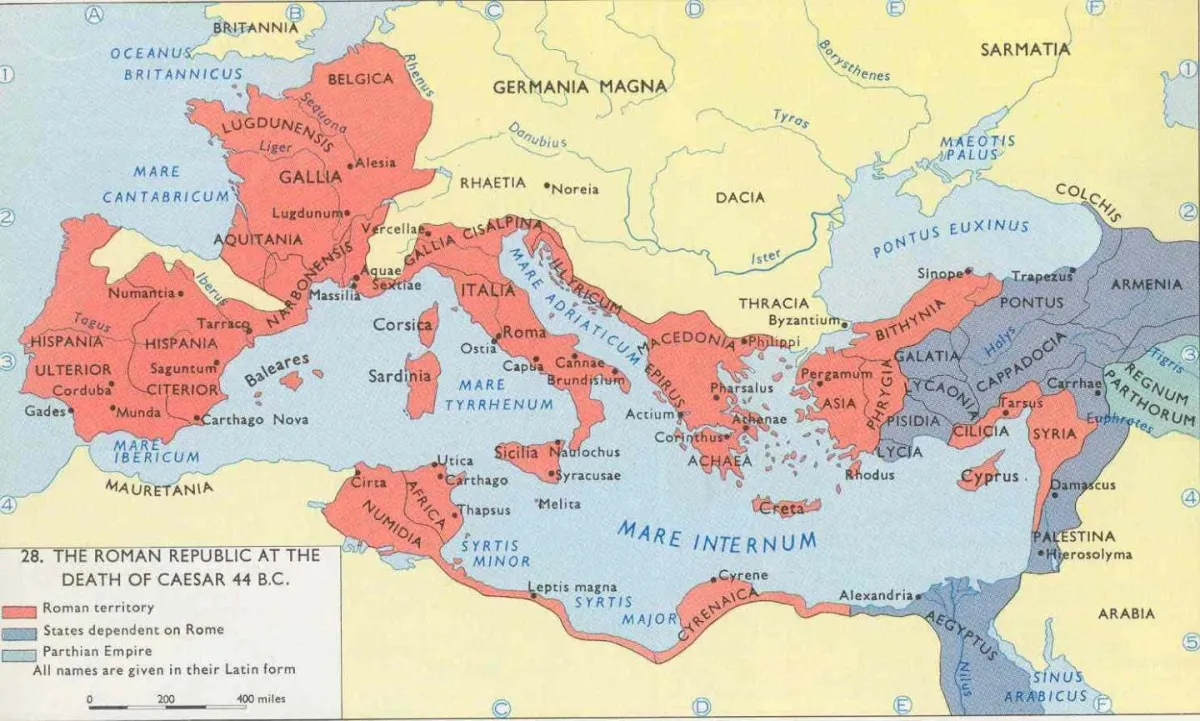 Photo: Roman Republic, via assets.sutori.com
The 25th Amendment shares this dangerous characteristic: it provides constitutional means to achieve unconstitutional ends. When political disagreement can be reframed as presidential "inability," the amendment becomes a loaded gun pointed at the heart of democratic governance.
The Path Forward: Constitutional Clarity
The solution isn't to repeal the 25th Amendment — genuine presidential incapacity remains a real concern that requires constitutional address. Instead, Congress must clarify the amendment's terms through legislation that defines "unable" in objective, medical terms rather than subjective political judgments.
More importantly, the American people must recognize the threat this ambiguity poses to their electoral sovereignty. When Washington insiders treat the 25th Amendment as a political tool rather than an emergency safeguard, they're not protecting the Constitution — they're undermining it.
The 25th Amendment was meant to be democracy's safety valve, not its off switch.