
When Your Phone Company Becomes a Government Informant
Every email you send, every location you visit, every search you conduct — all of it sits in corporate databases, legally accessible to government agencies without the warrant protection the Founders believed essential to a free society. The Supreme Court's third-party doctrine, born in 1976's United States v. Miller, has metastasized into the constitutional equivalent of a cancer, eating away at Fourth Amendment protections one digital transaction at a time.
The doctrine's logic seemed reasonable enough in the analog era: if you voluntarily share information with a third party — your bank, your phone company — you lose any "reasonable expectation of privacy" in that data. But what worked for checking account records and phone numbers has become a constitutional disaster in an age where every aspect of human existence generates digital footprints stored by private companies.
The Founders Never Imagined Surveillance Capitalism
James Madison and the constitutional framers designed the Fourth Amendment's warrant requirement as a bulwark against the "general warrants" that British authorities used to ransack colonial homes and businesses. They understood that government power, unchecked by judicial oversight, inevitably becomes government tyranny.
Today's digital surveillance makes King George's general warrants look quaint by comparison. Federal agencies can access years of location data, email communications, search histories, and private messages — painting an intimate portrait of American citizens' lives — simply by sending a request to Google, Apple, or Facebook. No warrant required. No probable cause needed. No judicial review mandated.
 Photo: King George, via www.gannett-cdn.com
The numbers are staggering. Google alone received over 50,000 requests for user data from U.S. law enforcement in 2022, affecting more than 100,000 accounts. Apple fielded nearly 30,000 requests. These aren't terrorism investigations or organized crime cases — they're routine law enforcement fishing expeditions that would have horrified the Founders.
The Supreme Court's Timid Half-Measures
The Court took a tentative step toward sanity in 2018's Carpenter v. United States, ruling that accessing cell phone location data requires a warrant. But the decision was frustratingly narrow, leaving vast categories of digital information — emails, cloud storage, social media communications — in constitutional limbo.
Justice Neil Gorsuch's concurrence in Carpenter pointed toward a more fundamental solution: abandoning the third-party doctrine entirely and returning to property-based Fourth Amendment analysis. Under this approach, your emails belong to you regardless of where they're stored, just as your papers belonged to you regardless of whether you kept them at home or in a safety deposit box.
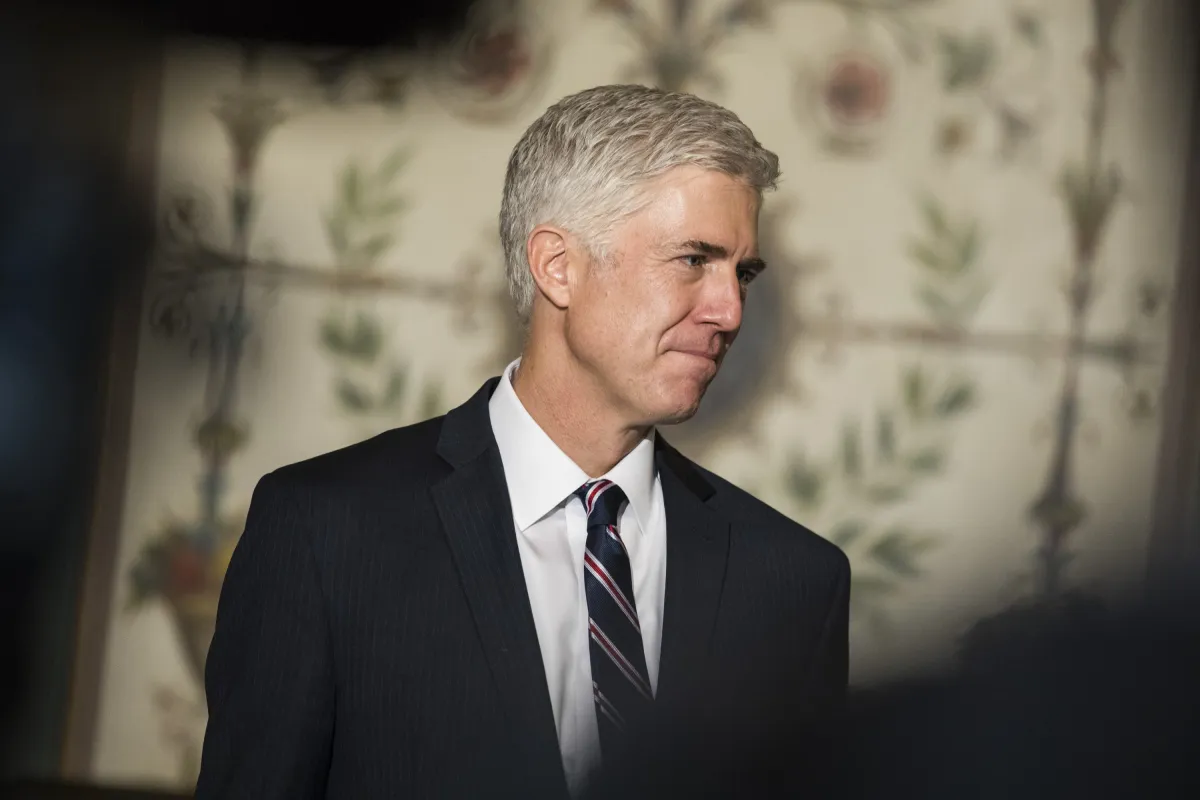 Photo: Neil Gorsuch, via api.time.com
Congress Has the Tools — But Not the Will
While waiting for the Supreme Court to fully address digital privacy, Congress could act immediately. The Email Privacy Act, which would require warrants for all electronic communications older than 180 days, has languished in committee for years. More comprehensive reform — extending warrant requirements to all digital data held by third parties — would restore the constitutional balance the Founders intended.
The opposition argument — that warrant requirements would hamstring law enforcement — crumbles under scrutiny. Police managed to investigate crimes for two centuries under the Fourth Amendment's warrant standard. The idea that constitutional protections are somehow incompatible with effective policing is the sort of authoritarian logic the Bill of Rights was designed to reject.
Moreover, the current system creates perverse incentives. Why develop traditional investigative skills when you can simply subpoena a suspect's entire digital life? The warrant requirement doesn't prevent investigations — it ensures they're conducted constitutionally.
The Broader Stakes for Constitutional Government
The digital privacy crisis reflects a deeper problem: the gradual erosion of constitutional limits on government power. When federal agencies can access intimate details of citizens' lives without judicial oversight, we've moved from a republic of laws to an administrative state of bureaucratic convenience.
This isn't about protecting criminals — it's about preserving the constitutional framework that protects all Americans. Today's surveillance overreach targets ordinary citizens whose only crime is living in the digital age. Tomorrow's targets could be political dissidents, journalists, or anyone who challenges government orthodoxy.
The third-party doctrine has already enabled fishing expeditions against January 6th protesters, conservative activists, and parents attending school board meetings. When government agencies can access digital communications without warrants, every American becomes a potential suspect in their own surveillance file.
Technology Changes — Constitutional Principles Don't
The Founders understood that government power tends to expand unless constrained by institutional safeguards. The Fourth Amendment's warrant requirement wasn't just about protecting privacy — it was about forcing government agents to justify their actions before neutral magistrates.
That principle applies whether we're talking about physical searches in 1791 or digital surveillance in 2024. The Constitution doesn't become less relevant because technology advances — it becomes more essential as government capabilities expand.
The Path Forward
Reform requires action on multiple fronts. The Supreme Court should abandon the third-party doctrine entirely, recognizing that digital papers and effects deserve the same constitutional protection as physical ones. Congress should pass comprehensive digital privacy legislation requiring warrants for all electronic communications and stored data. And states should enact their own constitutional protections where federal law falls short.
The alternative is a surveillance state that would make the British authorities who sparked the American Revolution proud. Every email monitored, every location tracked, every search recorded — all without the judicial oversight the Founders believed essential to free government.
The Fourth Amendment isn't dying because technology made it obsolete — it's dying because we've allowed convenience to trump constitutional principles, and corporate cooperation to replace judicial oversight. Restoring digital privacy rights isn't about hampering law enforcement; it's about preserving the constitutional framework that makes America worth defending in the first place.