
When House Democrats impeached President Donald Trump twice in four years — once over a phone call to Ukraine, once for allegedly inciting an insurrection — they didn't just target a president they despised. They fundamentally altered the constitutional balance of power in ways that would have appalled the men who wrote Article II, Section 4 of the Constitution.
Impeachment was never meant to be a legislative veto. It was designed as the ultimate constitutional emergency brake, reserved for cases so egregious that removing a duly elected president became a constitutional necessity, not a political convenience.
The Founders' Vision: A Nuclear Option, Not a Political Tool
Alexander Hamilton, writing in Federalist 65, described impeachment as addressing "those offences which proceed from the misconduct of public men, or, in other words, from the abuse or violation of some public trust." The key phrase here is "violation of some public trust" — not policy disagreements, not partisan warfare, not even poor judgment.
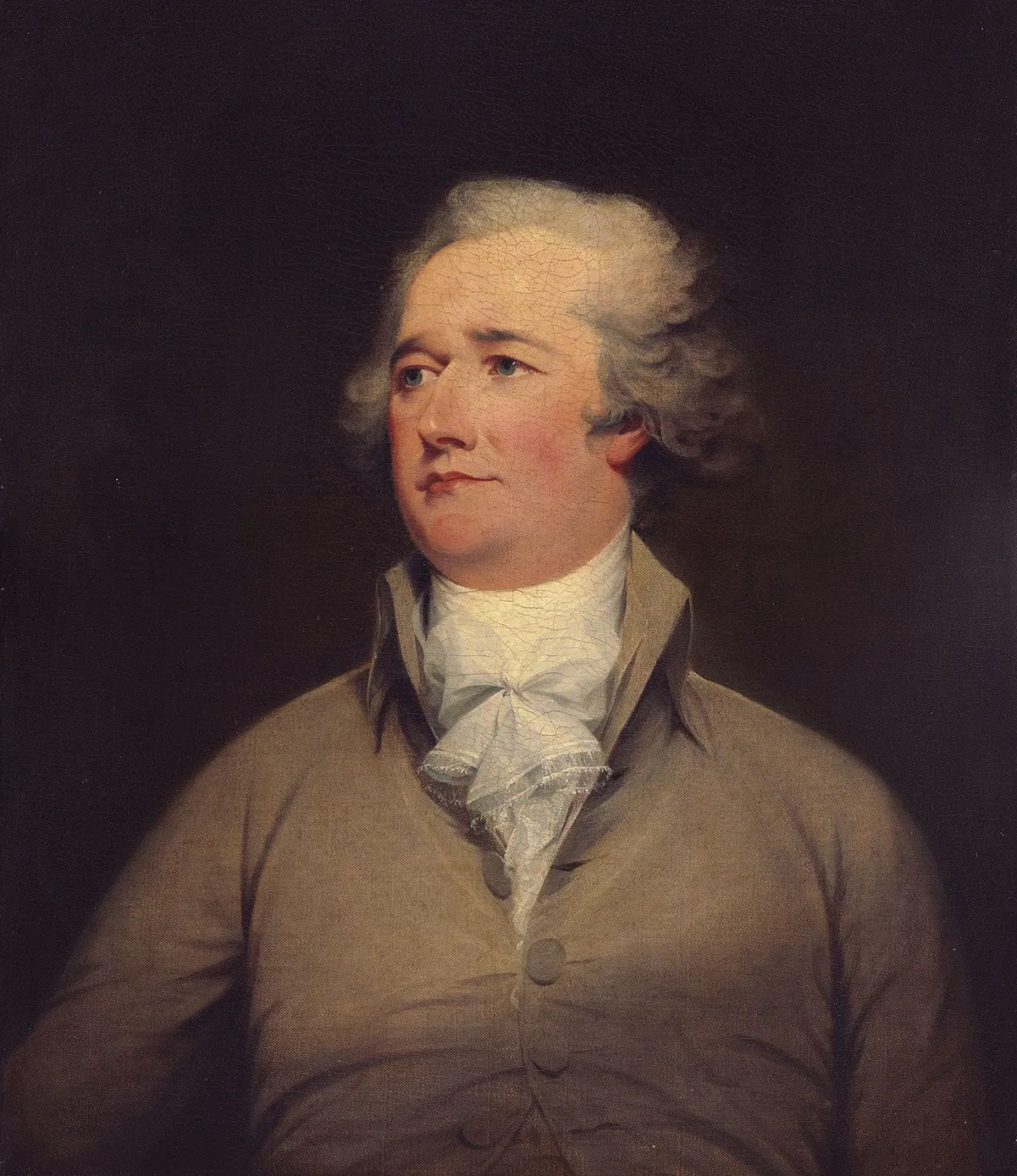 Photo: Alexander Hamilton, via cdn.britannica.com
The Founders deliberately set the bar high: "Treason, Bribery, or other high Crimes and Misdemeanors." They rejected proposals for impeachment based on "maladministration" precisely because they understood it would make the presidency subservient to Congress. George Mason's original suggestion of "maladministration" was struck down after James Madison warned it would destroy the independence of the executive branch.
 Photo: James Madison, via cdn.britannica.com
 Photo: George Mason, via images.mubicdn.net
Yet today's political class has effectively restored "maladministration" as grounds for removal, just under different names.
The Escalating Pattern of Constitutional Degradation
The modern degradation began with Bill Clinton's impeachment in 1998. While Clinton's perjury and obstruction of justice met a higher legal standard than recent attempts, the partisan nature of the proceedings — falling almost entirely along party lines — established a dangerous precedent that impeachment could be pursued without genuine bipartisan consensus.
Trump's first impeachment over the Ukraine phone call represented a quantum leap in constitutional recklessness. The alleged "quid pro quo" involved foreign policy decisions that fall squarely within presidential prerogatives. Even if one accepts the most uncharitable interpretation of Trump's motives, investigating potential corruption by a political rival's family member hardly rises to the level of "high Crimes and Misdemeanors."
The second impeachment, rushed through in Trump's final days without proper deliberation or due process, abandoned even the pretense of constitutional gravity. Impeaching a president for a speech — however inflammatory — that explicitly called for peaceful protest crosses a constitutional line that should terrify anyone concerned about executive independence.
Beyond the Presidency: Weaponizing Impeachment Across Government
The impeachment fever hasn't stopped with presidents. Progressive activists and some Democratic lawmakers have openly discussed impeaching Supreme Court justices for issuing conservative rulings, particularly after the Dobbs decision overturning Roe v. Wade. This represents perhaps the most dangerous escalation yet — threatening judicial independence based purely on ideological disagreement with legal outcomes.
Similarly, calls to impeach cabinet officials for implementing policies within their lawful authority signal a complete abandonment of the impeachment clause's original purpose. When policy disagreements become grounds for removal proceedings, we're no longer operating under a constitutional system — we're moving toward a parliamentary system where the executive serves at the pleasure of the legislative majority.
The Constitutional Crisis Hiding in Plain Sight
Critics will argue that impeachment remains difficult — requiring a House majority and two-thirds of the Senate for conviction. But this misses the point entirely. The damage occurs in the weaponization itself, not just in successful removals.
When impeachment becomes a routine political tactic deployed whenever the opposition controls the House, it fundamentally alters the relationship between branches. Presidents begin governing with one eye on potential impeachment proceedings. The executive branch's independence — essential for effective governance and faithful execution of the laws — erodes under constant threat of removal for political reasons.
Moreover, the normalization of impeachment as a political tool virtually guarantees its continued escalation. If a phone call about investigating corruption justifies impeachment, what presidential action doesn't? If Supreme Court justices can be threatened with removal for conservative rulings, what judicial decision is safe from political retaliation?
Restoring Constitutional Boundaries
The solution isn't to make impeachment harder through constitutional amendment — the Founders set appropriate thresholds. The solution is to restore the constitutional culture that respects those thresholds.
This means returning to the understanding that impeachment requires genuine high crimes, not policy disagreements. It means recognizing that presidential prerogatives in foreign policy, executive appointments, and law enforcement cannot be second-guessed through removal proceedings simply because Congress disapproves of the outcomes.
Most importantly, it means understanding that the separation of powers isn't just a structural arrangement — it's a safeguard against the concentration of power that threatens individual liberty. When Congress can effectively control the executive through the constant threat of impeachment, we've abandoned that safeguard.
The Path Forward
Conservatives must lead the effort to restore constitutional boundaries around impeachment, even when it might benefit their political opponents in the short term. This means calling out impeachment overreach regardless of which party initiates it, and defending the independence of all three branches from political weaponization.
The alternative is a system where every election effectively becomes a parliamentary vote of no confidence, where presidents govern at the sufferance of Congress, and where the constitutional framework the Founders designed to prevent tyranny becomes the very mechanism through which it's imposed.
The impeachment clause was designed to protect the Constitution from genuinely dangerous officials — not to serve as a political cudgel for whoever happens to control the House.