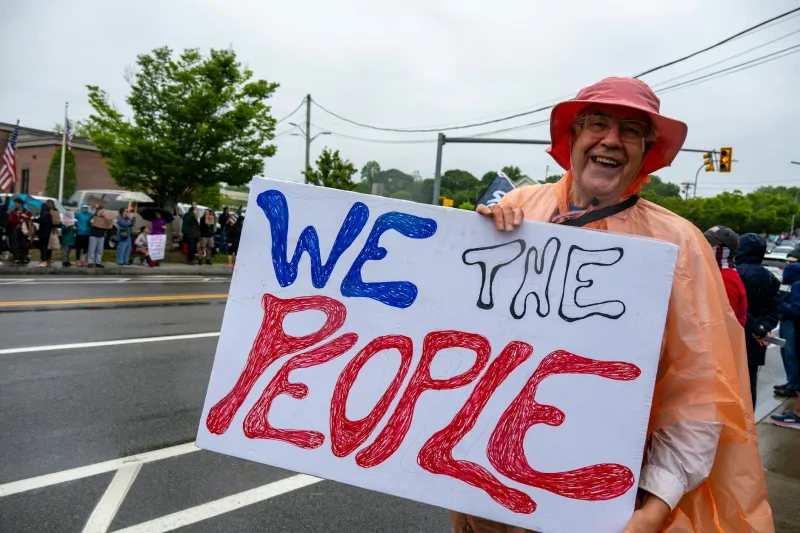
The American presidency has become something the Founders would barely recognize — an imperial office that legislates through executive orders, spends money Congress never appropriated, and rewrites laws at will. What's most alarming isn't that it's happening, but that both parties have cheered it on when their candidate sits in the Oval Office.
The Pen-and-Phone Presidency Becomes the New Normal
Barack Obama set the template in 2014 when he declared, "I've got a pen and I've got a phone," justifying his unilateral creation of DACA after repeatedly stating he lacked the constitutional authority to do so. When Congress wouldn't pass the DREAM Act, Obama simply implemented it anyway, granting work permits and legal status to nearly 800,000 illegal immigrants through executive memorandum.
Donald Trump escalated the pattern, issuing 220 executive orders in four years — everything from trade tariffs that function as taxes (a power explicitly granted to Congress in Article I) to emergency border wall funding that redirected military construction money without legislative approval. His supporters cheered each pen stroke as decisive leadership.
Joe Biden has proven the most brazen yet, attempting to forgive $400 billion in student loans through executive action despite the Supreme Court's clear warning in West Virginia v. EPA about major questions requiring explicit congressional authorization. Even after the Court struck down his first attempt, Biden immediately announced a new workaround through different regulatory channels.
Congress: The Branch That Forgot How to Govern
The real culprit isn't ambitious presidents — it's a Congress that has systematically surrendered its constitutional responsibilities. Article I, Section 1 couldn't be clearer: "All legislative Powers herein granted shall be vested in a Congress of the United States." Not some. Not most. All.
Yet today's Congress prefers to pass vague enabling legislation and let executive agencies fill in the details. The Clean Air Act doesn't mention carbon dioxide, but the EPA regulates it anyway. The Higher Education Act says nothing about loan forgiveness, but the Department of Education claims that authority. Immigration law requires deportation of illegal entrants, but DHS simply chooses not to enforce it.
This isn't governance — it's constitutional vandalism. Congress has transformed itself from the primary branch of government into a combination complaint department and fundraising operation, happy to let presidents take credit for popular policies and blame for unpopular ones.
The Conservative Trap: Cheering Today, Crying Tomorrow
Conservatives bear special responsibility for this mess. Too many on the right have adopted a "our guy can do it too" mentality that abandons principled constitutional limits. When Trump bypassed Congress on border wall funding, conservative media celebrated his "Art of the Deal" maneuvering. When Biden uses identical executive overreach on climate policy, the same voices cry tyranny.
This short-term thinking has handed progressives a loaded constitutional weapon. Every precedent set by a Republican president becomes justification for the next Democratic administration to push even further. Obama's DACA justified Biden's student loan scheme. Trump's emergency border declaration will justify the next progressive president's climate emergency.
The Founders designed separated powers not as an inconvenience to be circumvented, but as the primary safeguard against tyranny. As James Madison wrote in Federalist 47, "The accumulation of all powers, legislative, executive, and judiciary, in the same hands... may justly be pronounced the very definition of tyranny."
The Path Back to Constitutional Government
Restoring Article I authority requires more than just electing better presidents — it demands structural reforms that both parties will resist. Congress must reclaim its power of the purse by ending omnibus spending bills and returning to regular order appropriations. It must sunset all existing regulatory authorities and require explicit reauthorization for any agency action with economic impact above defined thresholds.
Most importantly, conservatives must embrace constitutional consistency even when it constrains friendly presidents. The same constitutional principles that limit Biden's student loan forgiveness must also limit future Republican attempts to defund sanctuary cities or redirect climate funding to border security without explicit congressional approval.
The Choice Before Us
The imperial presidency didn't emerge overnight, and it won't be dismantled quickly. But the alternative to constitutional restoration isn't efficient governance — it's a system where 330 million Americans live under the whims of whoever happens to occupy the White House.
Every executive order that bypasses Congress, every regulatory rewrite that ignores statutory text, every emergency declaration that manufactures crisis authority moves us further from the constitutional republic the Founders designed. The question isn't whether the next president will abuse these powers — it's whether we'll still have a Constitution worth defending when they do.
The imperial presidency thrives on congressional cowardice and partisan opportunism, but it dies the moment both parties choose constitutional principle over political convenience.