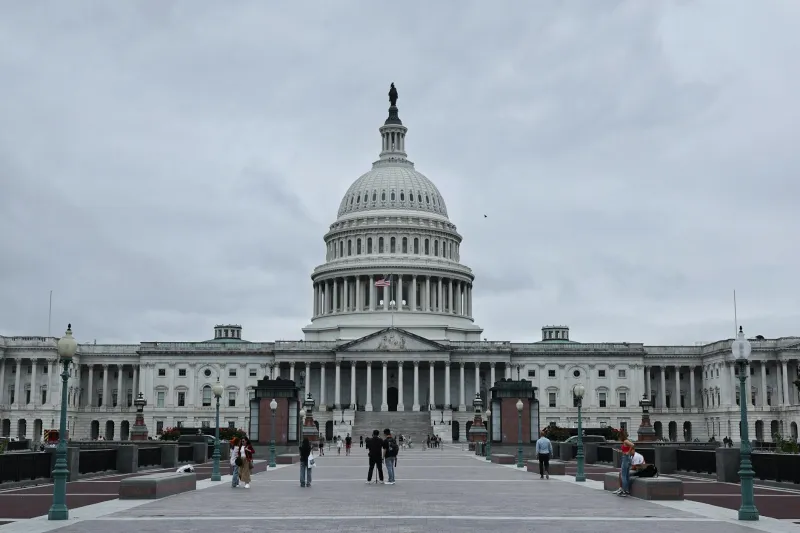
When Congress federalized the National Guard in 1903, it didn't just reorganize America's military reserves — it quietly dismantled one of the Constitution's most important checks on federal power. The militia clauses in Articles I and II weren't afterthoughts by the Founders; they were deliberate structural safeguards designed to ensure that citizen-soldiers would answer to their states first, not Washington.
The Constitutional Architecture the Founders Actually Built
Article I, Section 8 grants Congress the power "to provide for organizing, arming, and disciplining, the Militia, and for governing such Part of them as may be employed in the Service of the United States." Article II makes the President "Commander in Chief of the Army and Navy of the United States, and of the Militia of the several States, when called into the actual Service of the United States."
Notice what's missing: nowhere does the Constitution grant the federal government permanent control over state militias. The Founders envisioned a system where Congress could standardize training and equipment, but command authority remained with state governors unless militias were formally called into federal service for specific, constitutionally enumerated purposes.
This wasn't an oversight — it was the point. The militia system was designed to create a military force that could defend the nation while remaining fundamentally loyal to the states that raised and commanded it. As Alexander Hamilton wrote in Federalist 29, a select corps of citizens receiving more extensive training could form "the best possible security against" federal tyranny.
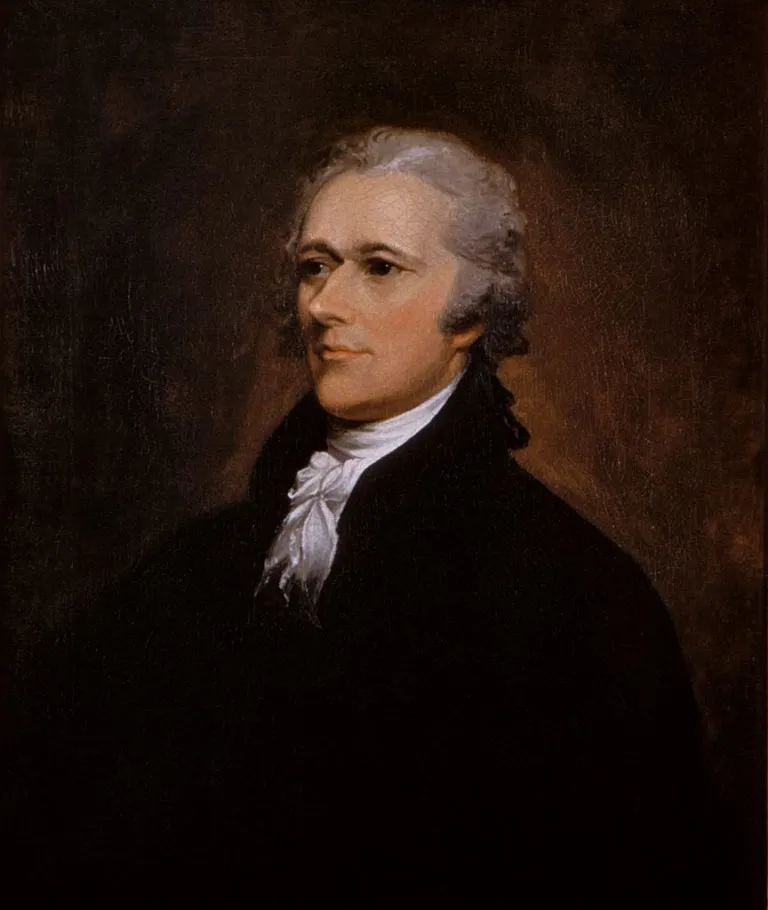 Photo: Alexander Hamilton, via facts.net
How the Dick Act Broke the Constitutional Framework
The Militia Act of 1903, sponsored by Congressman Charles Dick, fundamentally altered this balance. Under the guise of military modernization following the Spanish-American War's organizational failures, the Act divided the militia into two classes: the "organized militia" (which became the National Guard) and the "unorganized militia" (essentially every other able-bodied male citizen).
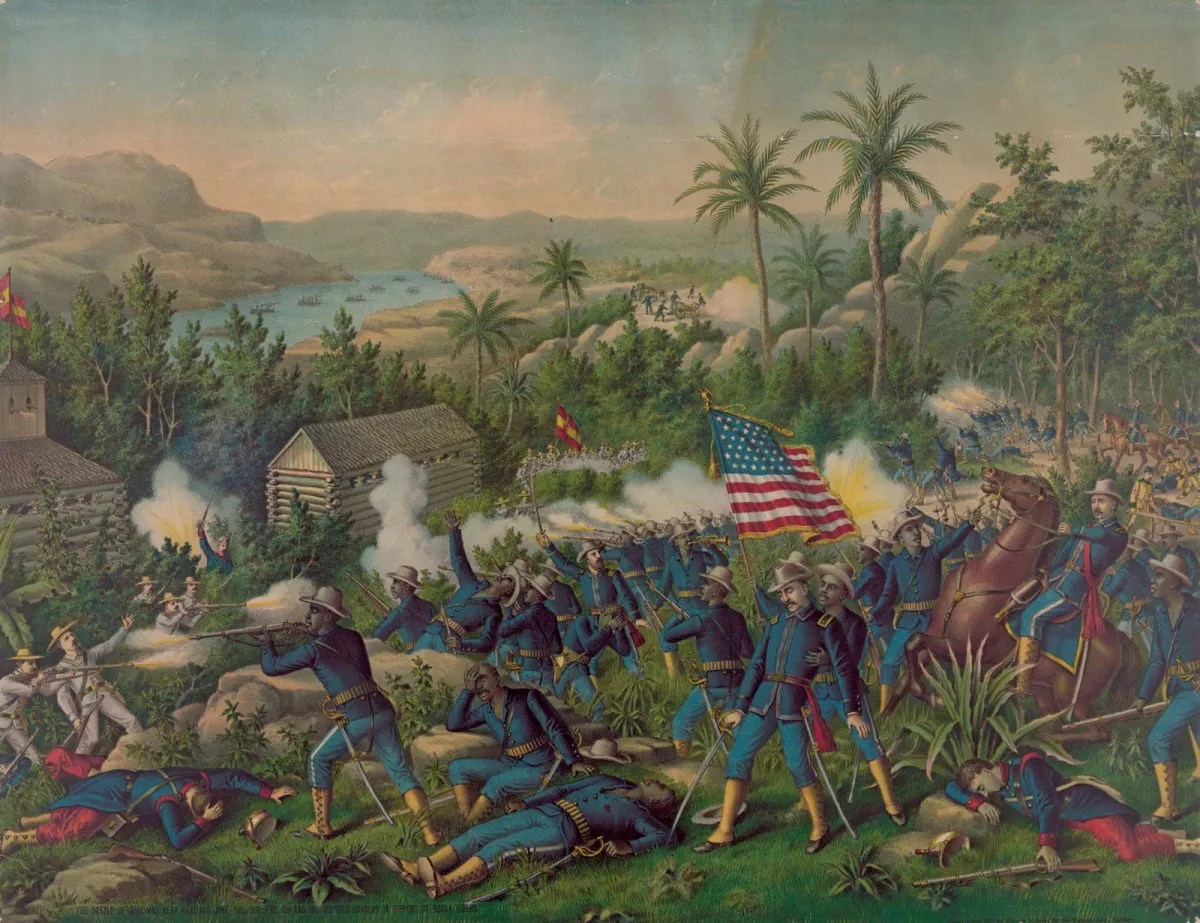 Photo: Spanish-American War, via cdn.britannica.com
 Photo: Charles Dick, via c8.alamy.com
The organized militia would receive federal funding, equipment, and training standards — but in exchange, it would be subject to federal activation without the explicit consent that the Constitution seemed to require. The Dick Act's successors, particularly the National Defense Act of 1916, completed the transformation by making the National Guard a reserve component of the U.S. Army.
By 1933, Congress had eliminated any meaningful distinction between the National Guard and federal forces. The Guard became, in effect, a federally funded, federally trained, and federally controlled military unit that happened to be housed in state armories.
What We Lost: The Constitutional Check That Matters
The militia clauses weren't just about military organization — they were about power distribution. The Founders understood that whoever controls the military ultimately controls the government. By ensuring that citizen-soldiers remained primarily answerable to their states, the militia system created a constitutional circuit breaker against federal overreach.
Consider the implications: if a federal administration attempted to use military force against its own citizens for unconstitutional purposes, state-controlled militias could theoretically resist. This wasn't theoretical paranoia — it was practical political science based on centuries of experience with centralized military power.
Today's National Guard, despite its state designations, cannot serve this function. When federalized, Guard units answer directly to Washington, not to the governors who supposedly command them. The constitutional balance has been eliminated entirely.
The Progressive Counter-Argument Falls Apart
Defenders of the current system argue that modern military complexity requires federal coordination and that the old militia system was ineffective in actual conflicts. They point to the poor performance of state militias in the War of 1812 and the Spanish-American War as evidence that professionalization was necessary.
This argument misses the constitutional point entirely. Yes, professional military forces are more effective in conventional warfare — but effectiveness in war was never the militia clauses' primary purpose. Their purpose was to prevent the concentration of military power in federal hands while still allowing for national defense.
Moreover, the "ineffectiveness" argument proves too much. If we abandon constitutional structures every time they prove inconvenient or less than perfectly efficient, we abandon constitutionalism itself. The Constitution isn't an efficiency manual — it's a power-limiting document.
The Sovereignty Stakes in Modern Context
The militia clauses' destruction has implications far beyond military organization. Without genuine state-controlled military forces, states have lost their ultimate enforcement mechanism for resisting federal overreach. This isn't about secession or rebellion — it's about the constitutional principle that federal power must remain limited and that states retain meaningful sovereignty.
Consider recent federal mandates that governors have opposed: vaccine requirements, environmental regulations, immigration enforcement policies. In each case, states have found themselves arguing with Washington while possessing no practical means of resistance beyond litigation. The Founders would have found this dynamic incomprehensible.
The militia system provided states with what political scientists call "enforcement credibility" — the practical ability to back up their constitutional positions with something more than legal briefs.
Restoring Constitutional Balance
Restoring the militia clauses' original meaning wouldn't require dismantling the modern military or returning to 18th-century tactics. It would require creating genuine state military forces — separate from the National Guard — that answer exclusively to state governors and receive their funding from state treasuries.
Several states have already moved in this direction with state defense forces, but these units are typically small, poorly funded, and limited to disaster response. A constitutional restoration would require states to take seriously their responsibility to maintain "well regulated" militias capable of both defending their territory and, if necessary, checking federal overreach.
This isn't about preparing for civil war — it's about restoring the constitutional balance of power that made civil war unnecessary.
The militia clauses remain in the Constitution not as historical curiosities, but as structural safeguards that we dismantled at our own peril.