The Constitutional Loophole That Ate America
Buried in Article I, Section 8 of the Constitution lies eighteen words that have done more to expand federal power than any amendment, executive order, or Supreme Court decision: "To make all Laws which shall be necessary and proper for carrying into Execution the foregoing Powers." What the Founders intended as a practical tool to implement specific constitutional duties has become Washington's favorite blank check, authorizing everything from federal education mandates to healthcare regulations that would have horrified James Madison.
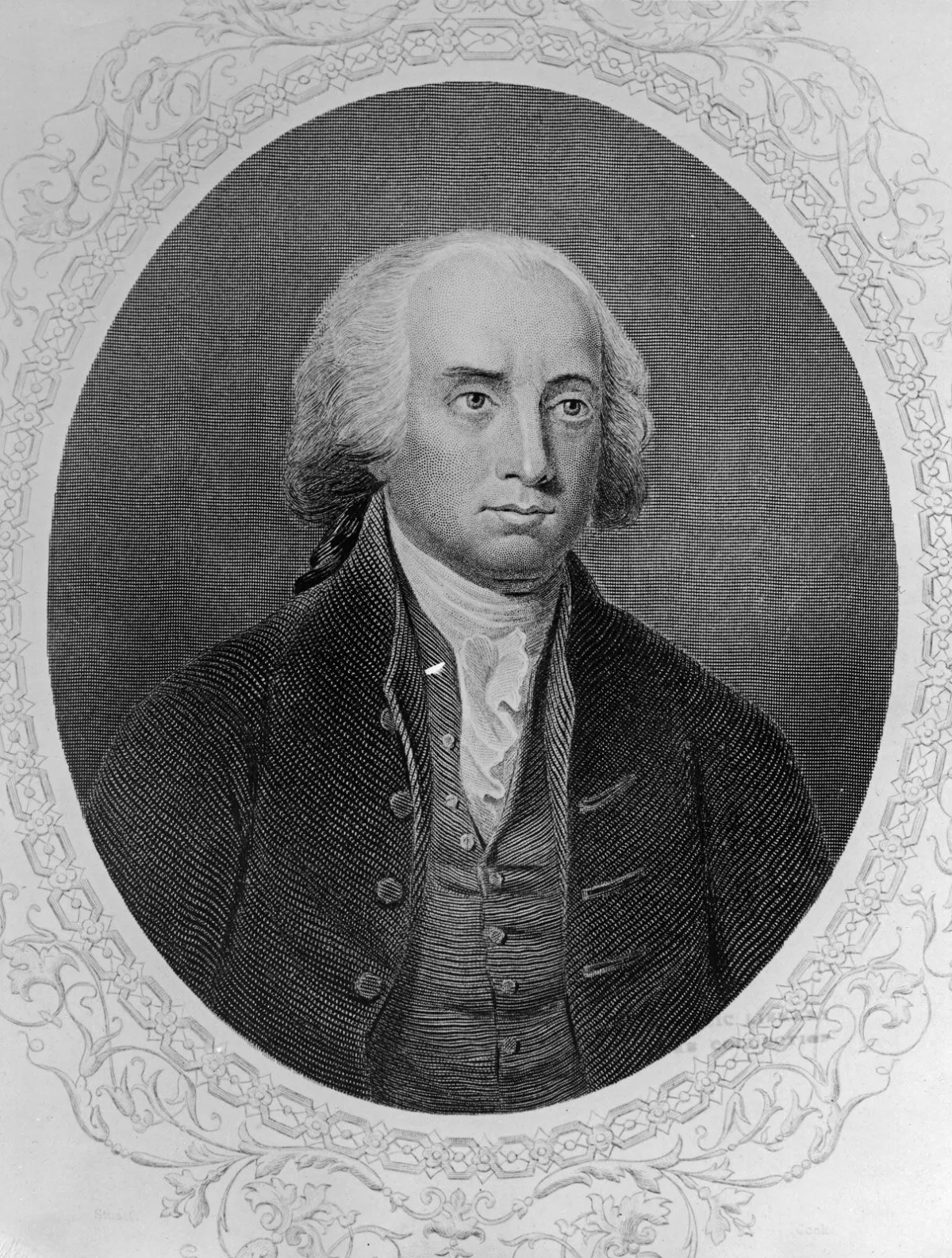 Photo: James Madison, via cdn.britannica.com
The Necessary and Proper Clause was never meant to be a standalone grant of power. It was designed to give Congress the tools to execute the seventeen enumerated powers that precede it in the Constitution. Yet today, it functions as the constitutional equivalent of a credit card with no spending limit, allowing federal bureaucrats to justify virtually any intervention in American life by claiming it's somehow "necessary and proper" to regulate interstate commerce or provide for the general welfare.
How McCulloch v. Maryland Broke the Constitutional Dam
The transformation began in 1819 with Chief Justice John Marshall's decision in McCulloch v. Maryland. While Marshall correctly upheld Congress's authority to create a national bank as necessary to execute its fiscal powers, his expansive interpretation of "necessary" opened floodgates that have never been closed. Marshall argued that "necessary" didn't mean "absolutely essential" but merely "convenient" or "useful." This semantic shift fundamentally altered the constitutional balance of power.
 Photo: John Marshall, via historyaffairs.com
Marshall's reasoning might have been defensible in the context of establishing basic governmental infrastructure. But subsequent courts have stretched his interpretation beyond recognition. By the New Deal era, the Supreme Court was upholding federal programs that bore no meaningful connection to enumerated powers, using the Necessary and Proper Clause as constitutional window dressing for what amounted to a general police power the Founders explicitly denied to the federal government.
The Modern Expansion: From Banks to Bathrooms
Today's federal overreach makes Marshall's bank look quaint by comparison. The Department of Education, which has no constitutional basis in enumerated powers, justifies its existence partly through creative interpretations of the Necessary and Proper Clause combined with the spending power. Federal bureaucrats now dictate local school bathroom policies, curriculum standards, and disciplinary procedures—all under the theory that such regulations are "necessary and proper" to ensure effective use of federal education funds.
The pattern repeats across every sector of American life. Environmental regulations that shut down entire industries are deemed "necessary and proper" to regulate interstate commerce, even when the regulated activity occurs entirely within state boundaries. Healthcare mandates forcing Americans to purchase private insurance are justified as "necessary and proper" to regulate the healthcare market, despite the obvious constitutional problems with forcing citizens into commercial transactions.
The Affordable Care Act represents perhaps the most audacious use of this constitutional sleight of hand. While the Supreme Court ultimately upheld the individual mandate as a tax rather than a regulation, the government's initial argument relied heavily on the Necessary and Proper Clause to justify forcing Americans to buy health insurance. The logic was circular: Congress could regulate healthcare markets because healthcare affects interstate commerce, and forcing people to buy insurance was necessary and proper to make that regulation effective.
The Originalist Case for Constitutional Restraint
The Founders' understanding of "necessary and proper" was far more restrictive than modern interpretations suggest. Alexander Hamilton, writing in Federalist 33, explicitly stated that the clause granted no additional powers beyond those already enumerated. It was merely a declaration that Congress possessed the means to execute the powers already granted, not a license to invent new ones.
 Photo: Alexander Hamilton, via coloringlib.com
More importantly, the Tenth Amendment makes clear that powers not delegated to the United States are reserved to the states or the people. If the Necessary and Proper Clause could justify any federal action that Congress deemed useful, the Tenth Amendment would be meaningless. The entire structure of enumerated powers would collapse into a general grant of authority limited only by political will.
Contemporary evidence supports this restrictive reading. When Anti-Federalists warned that the Necessary and Proper Clause could be used to expand federal power indefinitely, Federalists like Hamilton dismissed such concerns as paranoid fantasy. They argued that the clause was merely clarifying language that added nothing substantive to federal authority. If the Federalists were being honest—and the Constitution was ratified based on their assurances—then modern interpretations represent a fundamental betrayal of the ratification compact.
The Liberal Counter-Argument Falls Apart Under Scrutiny
Progressive constitutional scholars argue that the Founders couldn't have anticipated modern challenges requiring federal coordination, from environmental protection to financial regulation. They contend that a rigid interpretation of the Necessary and Proper Clause would leave Congress powerless to address genuinely national problems.
This argument fails on multiple levels. First, it assumes that every problem requires a federal solution, ignoring the Founders' deliberate choice to create a system of divided sovereignty. Many issues that progressives claim require federal intervention—education, healthcare, environmental protection—were historically managed effectively at the state level. Federal involvement often makes these problems worse, not better.
Second, the Constitution already provides mechanisms for adapting to new challenges: the amendment process. If Americans truly want the federal government to have new powers, they can grant them through Article V. The fact that constitutional amendments are difficult to pass is a feature, not a bug. It prevents temporary political majorities from fundamentally altering the structure of government without broad consensus.
The Path Forward: Judicial Restoration and Legislative Discipline
Reining in the Necessary and Proper Clause requires both judicial courage and legislative discipline. The Supreme Court must return to the original understanding that the clause grants no independent powers but merely clarifies Congress's authority to implement enumerated ones. This means applying genuine scrutiny to federal programs and striking down those that cannot be clearly tied to specific constitutional powers.
Congress, meanwhile, must rediscover the lost art of constitutional self-restraint. Before passing any new law, members should be required to specify which enumerated power authorizes their action and explain why the proposed means are truly necessary to execute that power. This simple requirement would eliminate much of the federal overreach that characterizes modern governance.
The stakes couldn't be higher. Every expansion of federal power under the Necessary and Proper Clause comes at the expense of state authority and individual liberty. Every new program justified by this constitutional blank check moves us further from the system of limited government the Founders designed and closer to the centralized administrative state they fought a revolution to escape.
The Necessary and Proper Clause was meant to be the Constitution's fine print, not its most important provision—and it's time the courts and Congress remembered the difference.