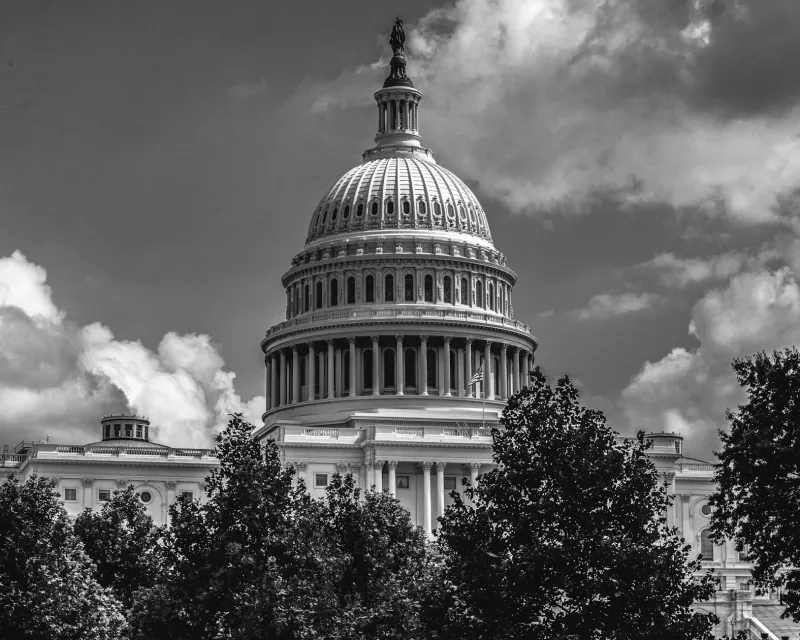
The Great Constitutional Abdication
In the marble halls of the Supreme Court last term, a constitutional principle long thought dead stirred to life. The nondelegation doctrine—the foundational idea that Congress cannot hand its lawmaking power to executive agencies—emerged from decades of dormancy in cases like West Virginia v. EPA. For the first time since the New Deal era, the Court signaled it might actually enforce the Constitution's most basic structural requirement: that the people we elect to write laws must actually write them.
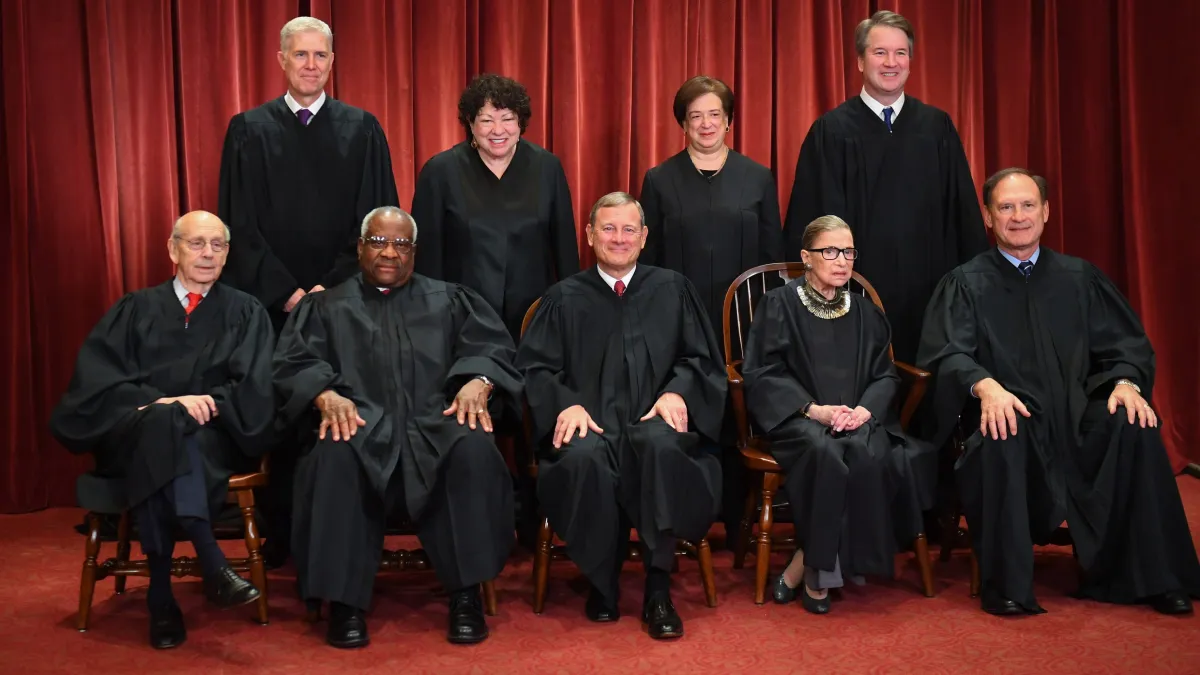 Photo: Supreme Court, via www.gannett-cdn.com
This isn't just legal theory. It's about whether voters have any real say in the rules that govern their lives, or whether unelected bureaucrats in Washington agencies will continue writing regulations with the force of law while Congress collects paychecks for doing nothing.
The Founders' Clear Intent
Article I, Section 1 of the Constitution states with crystalline clarity: "All legislative Powers herein granted shall be vested in a Congress of the United States." Not some legislative powers. Not most legislative powers. All of them. The Founders didn't stutter, and they weren't writing suggestions.
James Madison, the Constitution's chief architect, warned in Federalist 47 that "the accumulation of all powers, legislative, executive, and judiciary, in the same hands" was "the very definition of tyranny." Yet that's precisely what we've allowed to happen through the slow-motion constitutional coup of delegation.
The nondelegation doctrine emerged from this principle: Congress can delegate the execution of laws to agencies, but it cannot delegate the power to make those laws in the first place. Think of it as the difference between telling someone to enforce a speed limit of 55 mph versus telling them to "set reasonable speed limits." One preserves democratic accountability; the other abandons it.
The New Deal's Constitutional Revolution
For the first 150 years of American history, the Supreme Court took this principle seriously. In 1935, the Court struck down key New Deal programs in Schechter Poultry Corp. v. United States and Panama Refining Co. v. Ryan, ruling that Congress had unconstitutionally delegated its legislative authority to executive agencies.
But then came the constitutional revolution of 1937. Faced with Franklin Roosevelt's court-packing threat, the justices blinked. The Court effectively abandoned the nondelegation doctrine, creating the "intelligible principle" standard that has proven to be no standard at all. Under this toothless test, Congress can delegate virtually unlimited power to agencies as long as it provides some vague guidance—no matter how meaningless.
 Photo: Franklin Roosevelt, via cdn.britannica.com
The results speak for themselves. Today's Federal Register contains over 185,000 pages of regulations carrying the force of law. The Code of Federal Regulations spans more than 200 volumes. Meanwhile, Congress passes fewer than 100 laws per year, many of them symbolic resolutions or narrow technical fixes.
The Administrative State's Democratic Deficit
This constitutional abandonment has created what scholars call the "administrative state"—a fourth branch of government that the Founders never envisioned and voters never authorized. Career bureaucrats now wield more practical power over Americans' daily lives than the representatives they elect.
Consider the Environmental Protection Agency's Clean Power Plan, which would have fundamentally transformed America's energy sector and cost billions of dollars—all based on a vague delegation in a 1970 statute. Or the Department of Education's Title IX regulations that redefined sexual harassment on college campuses nationwide, despite Congress never voting on such definitions. These aren't minor regulatory details; they're major policy decisions disguised as administrative actions.
The democratic deficit is staggering. When Congress writes a law, voters can hold their representatives accountable at the ballot box. When an agency writes a regulation, voters have no recourse except to hope the president they elect will appoint agency heads who share their views—a hope that often proves futile as agencies develop their own institutional momentum.
The Supreme Court's Constitutional Awakening
Recent Supreme Court decisions suggest the justices are finally recognizing this constitutional crisis. In West Virginia v. EPA, the Court articulated the "major questions doctrine," requiring clear congressional authorization for agency actions of vast economic and political significance. It's not quite the nondelegation doctrine, but it's moving in the right direction.
Justice Neil Gorsuch has been particularly vocal about the need to restore constitutional boundaries. In his Gundy v. United States dissent, he wrote that the nondelegation doctrine "serves as one of the key constitutional safeguards of individual liberty." Justice Brett Kavanaugh has expressed similar concerns, suggesting a majority might be forming to revive meaningful limits on delegation.
The legal community is taking notice. Conservative legal scholars like Steven Calabresi and Gary Lawson have argued for decades that the administrative state's current form is fundamentally unconstitutional. Progressive scholars dismiss these concerns as reactionary, arguing that modern governance requires flexible delegation to expert agencies.
The Progressive Defense Falls Short
The progressive defense of unlimited delegation rests on three pillars, all of which crumble under scrutiny. First, they argue that modern problems are too complex for Congress to address directly. But complexity doesn't justify abandoning democracy—it requires Congress to work harder and make tougher choices, which is exactly what voters elect them to do.
Second, they claim agencies have superior expertise. But expertise without accountability is technocracy, not democracy. The Constitution doesn't contain an exception for smart people who think they know better than voters.
Third, they warn that restricting delegation would paralyze government. This reveals the problem: a government so large and intrusive that it can only function by ignoring constitutional limits isn't a government the Founders would recognize or citizens should accept.
The Path Forward
Reviving the nondelegation doctrine wouldn't end federal regulation—it would democratize it. Congress could still address environmental protection, financial oversight, and workplace safety. But it would have to write specific laws with clear standards rather than passing vague mandates and letting agencies fill in the blanks.
This would force Congress to make the hard choices voters elect them to make. Want to regulate carbon emissions? Write a law specifying what's regulated and by how much. Want to reform healthcare? Draft specific provisions rather than delegating to Health and Human Services to figure it out.
The political benefits would be enormous. Voters could actually hold their representatives accountable for the rules governing their lives. Interest groups would have to lobby Congress instead of capturing agencies. Democratic debate would replace bureaucratic diktat.
Constitutional Restoration Requires Courage
The nondelegation doctrine represents more than legal theory—it's the constitutional guardrail between democratic governance and administrative tyranny. For nearly a century, Congress has dismantled this guardrail piece by piece, preferring the political convenience of delegation to the constitutional duty of legislation.
The Supreme Court's growing skepticism of unlimited delegation offers hope, but restoration will require more than judicial intervention. It will require a Congress willing to reclaim its constitutional role and voters demanding nothing less than the democratic accountability the Founders promised.
The administrative state didn't emerge overnight, and it won't disappear quickly—but the alternative to constitutional restoration is the continued erosion of democratic governance until voters become subjects and representatives become figureheads.