Hidden within Article I, Section 9 of the Constitution lies what may be the most dangerous provision the Founders ever penned: "The Privilege of the Writ of Habeas Corpus shall not be suspended, unless when in Cases of Rebellion or Invasion the public Safety may require it." This single sentence — debated more fiercely at the Constitutional Convention than almost any other clause — grants Congress the power to suspend the Great Writ, effectively allowing the government to detain citizens indefinitely without trial.
In 2024, as executive power continues its relentless expansion and politicians routinely declare crises to justify extraordinary measures, conservatives who champion constitutional limits must confront an uncomfortable truth: the Suspension Clause represents the Constitution's own built-in mechanism for constitutional suspension.
The Founders' Reluctant Compromise
The inclusion of the Suspension Clause was no accident, but it wasn't unanimous either. During the Constitutional Convention, delegates understood they were crafting what Alexander Hamilton would later call "an awful power" — one that could render the entire Bill of Rights meaningless with a simple congressional vote.
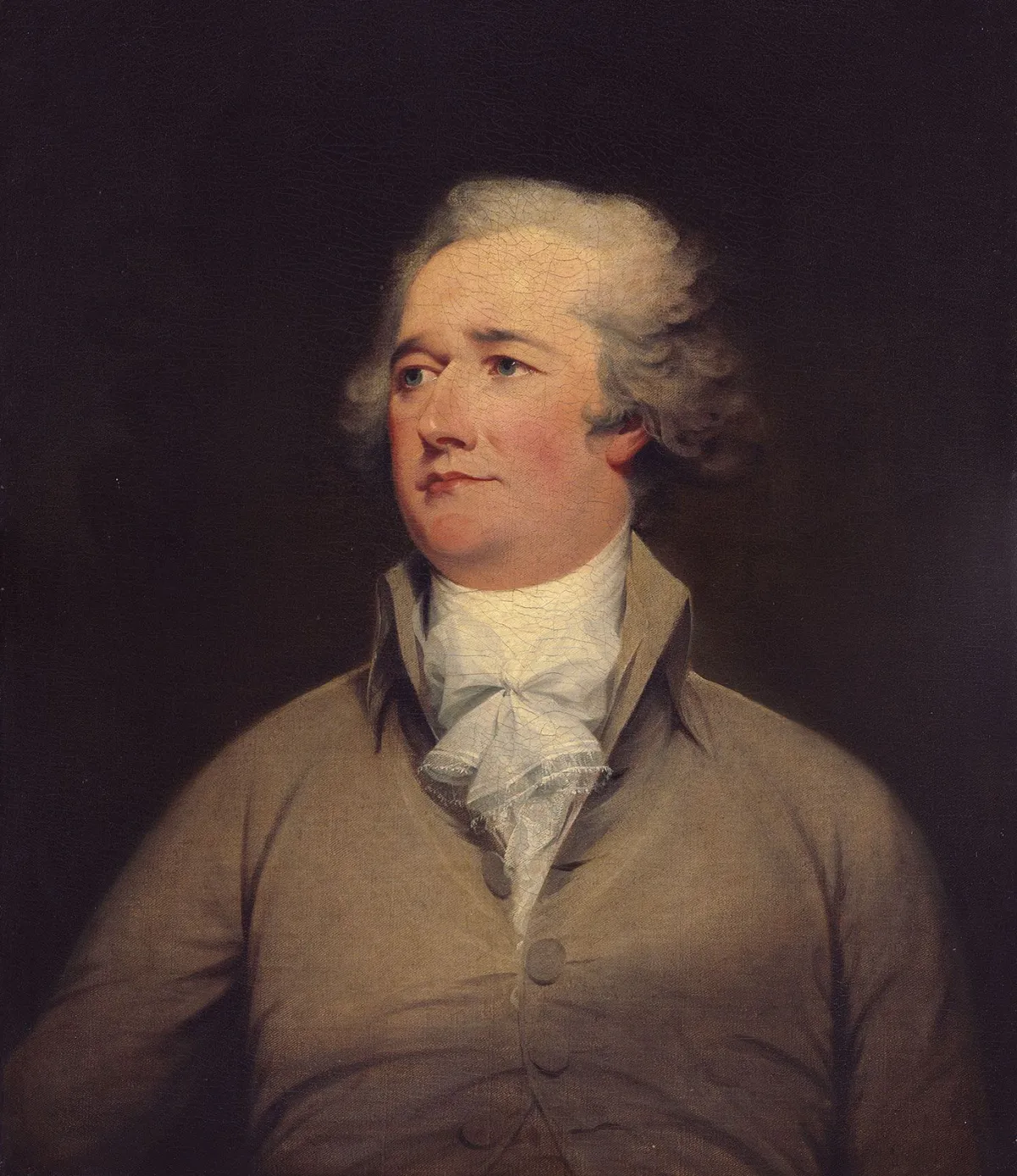 Photo: Alexander Hamilton, via cdn.britannica.com
The Founders had witnessed firsthand how quickly liberty could vanish during wartime. The British had suspended habeas corpus repeatedly in the American colonies, using the pretext of rebellion to justify indefinite detention without trial. Yet they also recognized that in genuine existential threats — actual rebellion or foreign invasion — traditional legal processes might prove inadequate to preserve the republic itself.
This tension produced the Suspension Clause's deliberately narrow language. The Constitution doesn't grant a general emergency power or authorize suspension during "national emergencies." It specifies only two circumstances: rebellion and invasion. The Founders chose these words carefully, understanding that broader language would invite abuse.
Lincoln's Precedent and Its Lasting Shadow
The first and most consequential use of suspension power came during the Civil War, when President Lincoln — not Congress — suspended habeas corpus along key transportation routes. Lincoln's action, later ratified by Congress, resulted in the detention of thousands of civilians, including newspaper editors, state legislators, and ordinary citizens suspected of Confederate sympathies.
Lincoln defended his actions in a special message to Congress: "Are all the laws, but one, to go unexecuted, and the government itself go to pieces, lest that one be violated?" His argument — that constitutional provisions must sometimes be violated to preserve the Constitution itself — established a dangerous precedent that echoes through American jurisprudence today.
The Supreme Court's eventual ruling in Ex parte Milligan (1866) provided some guardrails, establishing that military tribunals cannot try civilians when civil courts remain open and functional. But the damage was done: the precedent was set that suspension power, while constitutionally limited, could be stretched to meet perceived emergencies.
Modern Threats and Elastic Definitions
Today's political landscape makes the Suspension Clause more dangerous than ever. Consider how broadly modern politicians define "invasion." Border security hawks routinely describe illegal immigration as an "invasion" — technically accurate under some definitions, but a far cry from the armed foreign conquest the Founders envisioned.
Similarly, the definition of "rebellion" has proven elastic. During World War I, the Wilson administration detained thousands of German Americans and anti-war protesters without formal suspension but using similar justifications. Post-9/11 detention policies, while not formally invoking the Suspension Clause, demonstrated how quickly civil liberties can erode when national security is invoked.
The Administrative State's expansion compounds these risks. Federal agencies now routinely claim emergency powers to bypass normal legal processes. The COVID-19 pandemic saw unprecedented restrictions on movement, assembly, and commerce — all without formal constitutional suspension but using emergency authorities that achieve similar results.
The Conservative Dilemma
Conservatives face a particular challenge with the Suspension Clause. Unlike other constitutional provisions that clearly limit government power, this clause explicitly grants extraordinary authority. How do we reconcile support for constitutional text with opposition to constitutional tyranny?
The answer lies in originalist interpretation and structural limitations. The Founders included specific procedural safeguards: only Congress can suspend (not the executive), only during genuine rebellion or invasion, and only when public safety requires it. These aren't mere suggestions — they're constitutional mandates that courts must enforce.
Moreover, the Clause must be read alongside the entire constitutional structure. The Founders designed a system of separated powers precisely to prevent any single branch from accumulating dangerous authority. Even during suspension, other constitutional provisions — due process, separation of powers, federalism — remain operative constraints.
Defending Liberty Within Constitutional Bounds
The solution isn't to pretend the Suspension Clause doesn't exist or to advocate for constitutional amendment. Instead, conservatives must demand strict adherence to its original meaning and structural limitations.
First, Congress must reclaim its exclusive authority over suspension decisions. Executive detention programs that achieve suspension-like results without congressional authorization violate both the letter and spirit of the Constitution.
Second, courts must apply strict scrutiny to suspension claims, demanding evidence of actual rebellion or invasion — not mere civil unrest or immigration challenges. The bar for constitutional suspension must remain extraordinarily high.
Third, any suspension must include sunset provisions and regular congressional review. The Constitution doesn't authorize permanent emergency rule disguised as temporary security measures.
The Price of Constitutional Fidelity
Defending constitutional government sometimes requires defending provisions we'd prefer didn't exist. The Suspension Clause represents the Constitution's acknowledgment that republican government faces genuine existential threats that might require extraordinary measures.
But acknowledging this reality doesn't mean accepting abuse. The same constitutional fidelity that protects the Second Amendment must guard against Suspension Clause overreach. The same originalist methodology that restrains judicial activism must constrain emergency power.
The Founders gave us a Constitution designed to preserve liberty even during crisis — but only if we have the wisdom to use its powers responsibly and the courage to resist their abuse. In an age of perpetual emergency and expanding executive power, that wisdom and courage have never been more essential.
The Suspension Clause isn't just constitutional text — it's a test of whether Americans still possess the civic virtue necessary for self-government.