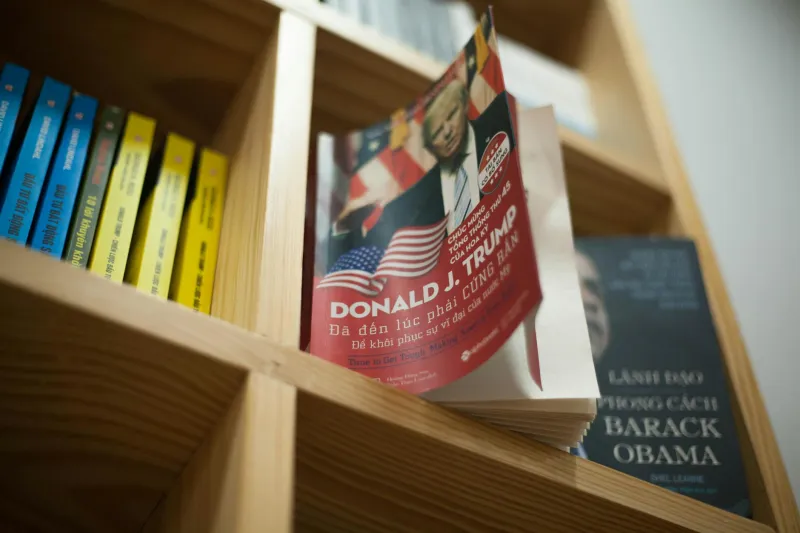
Trump's Tariff Gambit Is Rewriting the Rules of Global Trade — Here's Why the Establishment's Panic Tells You Everything
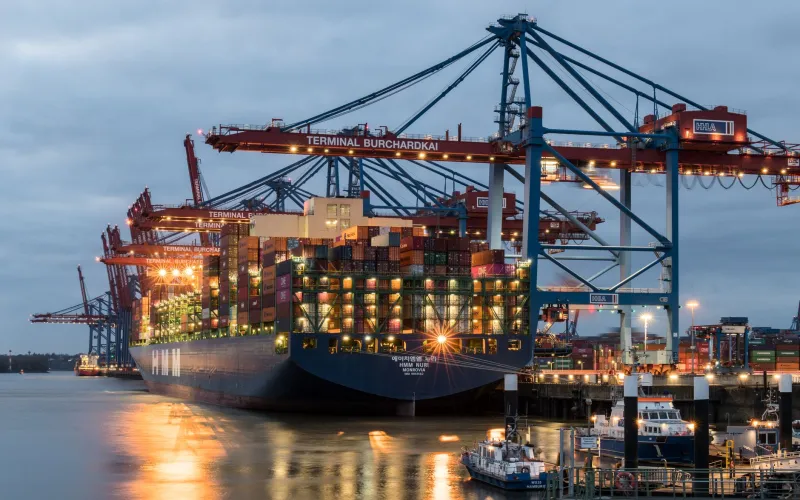
The Establishment's Coordinated Meltdown
President Trump's renewed embrace of aggressive tariff policies in 2025 has triggered a predictable chorus of outrage from the usual suspects. The International Monetary Fund warns of "dangerous protectionism." Wall Street analysts predict economic catastrophe. European allies threaten retaliation. The Washington Post editorial board declares it "economic vandalism."
Their panic is telling. When global elites react this hysterically to American economic sovereignty, it's usually because their own interests—not America's—are at stake.
Trump's latest tariff announcements target strategic sectors where America has been systematically disadvantaged by decades of one-sided trade deals. Steel, aluminum, semiconductors, rare earth minerals, and pharmaceutical ingredients—the building blocks of national security and economic independence—will face new import barriers designed to rebuild domestic production capacity.
The establishment's horror at this strategy reveals how completely free-trade orthodoxy has captured America's policy elite, even as that orthodoxy has failed American workers, hollowed out American manufacturing, and made America dangerously dependent on strategic competitors like China.
Economic Nationalism: The American Tradition
Critics portray Trump's tariff strategy as a radical departure from American economic tradition. This is historical amnesia. Economic nationalism built America into the world's dominant economy.
Alexander Hamilton's "Report on Manufactures" in 1791 explicitly argued for protective tariffs to nurture American industry against British competition. The Tariff of 1816 protected emerging American manufacturers from European dumping. The Morrill Tariff of 1861 helped fund the Union war effort while shielding Northern industry.
 Photo: Alexander Hamilton, via shop.solotech.com
These weren't accidents of policy—they reflected a coherent understanding that free trade works only between equals. When one side plays by rules of fair competition while the other subsidizes exports, manipulates currency, steals intellectual property, and exploits slave labor, "free trade" becomes a mechanism for wealth transfer from productive to predatory economies.
Even Ronald Reagan, icon of free-market conservatism, imposed tariffs on Japanese automobiles and semiconductors when unfair competition threatened American industries. The difference between Reagan's targeted approach and today's broader strategy reflects the scope of the problem, not a philosophical shift.
The China Challenge Changes Everything
The free-trade consensus emerged during the Cold War, when America's economic dominance was unquestioned and trade policy served broader geopolitical goals. Bringing allies into America's economic orbit made strategic sense when the alternative was Soviet influence.
China's rise has fundamentally altered this calculus. Unlike previous trade partners, China combines massive scale with systematic mercantilism. State-owned enterprises dump products below cost to capture market share. Intellectual property theft operates at industrial scale. Currency manipulation provides permanent export advantages. Environmental and labor standards remain deliberately substandard.
More fundamentally, China uses economic integration as a tool of strategic competition. Belt and Road Initiative investments create debt dependencies. Critical supply chain control provides leverage during crises. Technology transfer requirements systematically extract American innovations.
Facing this challenge with 1990s trade policy is like fighting World War II with World War I tactics. The rules have changed, but America's policy elite refuses to acknowledge it.
The Supply Chain Wake-Up Call
COVID-19 provided a brutal education in the costs of excessive economic integration. When China shut down, American hospitals couldn't get basic medical supplies. When shipping containers backed up at Long Beach, American consumers couldn't get Christmas presents. When a single factory in Taiwan faced drought, American automakers shut down assembly lines.
These weren't theoretical vulnerabilities—they were real-world consequences of prioritizing efficiency over resilience. The same just-in-time supply chains that maximized corporate profits left America dangerously exposed when systems faced stress.
Trump's tariff strategy explicitly addresses these vulnerabilities by incentivizing domestic production of critical goods. Critics call this "inefficient," but efficiency that leaves you defenseless during crises isn't actually efficient—it's short-sighted.
Addressing the Inflation Concern
The strongest argument against tariff policies concerns their potential inflationary impact. This concern deserves serious analysis, not dismissal.
Tariffs do raise prices for imported goods, and those costs are typically passed to consumers. In the short term, this can contribute to inflation, particularly for goods where domestic alternatives don't exist or take time to develop.
However, this analysis often ignores several crucial factors. First, tariff-driven price increases can spur domestic investment and production, eventually increasing supply and reducing prices. Second, strategic tariffs on specific sectors differ from across-the-board protectionism—they target areas where America has been systematically disadvantaged rather than seeking to block all imports.
Third, the inflation concern assumes static conditions. If tariffs successfully rebuild American manufacturing capacity, reduce strategic dependencies, and strengthen America's negotiating position, the long-term economic benefits can outweigh short-term costs.
Finally, the inflation argument ignores the hidden costs of current policy. When American workers lose jobs to unfair competition, when American companies lose intellectual property to systematic theft, when American supply chains face disruption from geopolitical crises, those costs appear in unemployment statistics and national security vulnerabilities rather than consumer price indices.
The Geopolitical Dimension
Trade policy isn't just about economics—it's about power. China's economic rise has translated directly into military expansion, technological advancement, and geopolitical influence. Every dollar of trade surplus China extracts from unfair trade practices helps fund People's Liberation Army modernization, Belt and Road expansion, and technology development programs explicitly designed to challenge American dominance.
Free-trade purists who ignore this reality treat economics as a game played in isolation from geopolitical competition. This was always naive, but it's become dangerous. When trade relationships systematically strengthen strategic competitors while weakening America, they're not economically neutral—they're strategically counterproductive.
Trump's tariff strategy explicitly recognizes this reality. By targeting sectors crucial to national security and economic independence, it attempts to rebuild American strength rather than simply optimize global supply chains.
The Elite Resistance
The intensity of establishment opposition to Trump's tariff strategy reflects more than policy disagreement—it reveals whose interests current trade arrangements serve.
Wall Street firms that profit from facilitating global capital flows oppose policies that might reduce those flows. Multinational corporations that have invested heavily in overseas production oppose policies that might make domestic production more attractive. International organizations whose relevance depends on managing global economic integration oppose policies that prioritize national economic sovereignty.
None of these groups necessarily represents broader American interests. Their opposition to economic nationalism reflects their own stake in the current system, not objective analysis of what's best for America.
The Path Forward
Effective tariff policy requires strategic thinking, not ideological purity. The goal isn't to eliminate international trade but to ensure it occurs on terms that benefit America rather than systematically disadvantage American workers and companies.
This means targeting specific sectors where unfair competition has hollowed out American capacity. It means using tariff revenue to invest in American infrastructure, education, and research rather than simply adding to general revenue. It means coordinating with allies who share concerns about Chinese mercantilism rather than treating trade policy as purely bilateral.
Most importantly, it means recognizing that economic policy serves national purposes, not abstract theoretical models. When free trade strengthens America and weakens its competitors, it serves American interests. When it does the opposite, it doesn't—regardless of what graduate school textbooks suggest.
The Bottom Line
Trump's tariff strategy represents a overdue recognition that America's economic policy must serve America's interests. The establishment's panic reflects their investment in a system that has systematically transferred American wealth and power to strategic competitors while enriching global elites at the expense of American workers.
Economic nationalism isn't radical—it's how successful nations have always approached trade policy when facing unfair competition and strategic challenges.
The real question isn't whether tariffs will disrupt global supply chains, but whether America will finally prioritize its own economic sovereignty over the preferences of international organizations that have never faced American voters.