FISA's Dirty Secret: How a Court Designed to Stop Foreign Spies Became a Tool to Surveil American Citizens

In 2022, the Foreign Intelligence Surveillance Court approved 1,062 government surveillance requests and denied exactly zero. This wasn't an anomaly — it was the norm. Since 1979, the FISA court has approved over 99.97% of all government surveillance applications, making it the most compliant judicial body in American history.
This secretive tribunal, established by the Foreign Intelligence Surveillance Act of 1978, was supposed to balance national security needs with constitutional protections. Instead, it has become what critics across the political spectrum now recognize as a parallel legal system that operates without meaningful oversight, adversarial process, or public accountability.
The Court That Never Says No
The numbers tell a disturbing story. From 1979 through 2022, the FISA court received 48,642 surveillance applications. It approved 48,627 of them. That's a rejection rate of 0.03% — statistically indistinguishable from automatic approval.
Compare this to regular federal courts, where government prosecutors — widely considered among the most successful litigants in the American legal system — still lose approximately 8% of their cases. The FISA court's near-perfect approval rate suggests either that the government only brings flawless cases requiring foreign surveillance, or that the court has abandoned any pretense of meaningful judicial review.
The truth is almost certainly the latter. Unlike every other court in the American system, FISA proceedings are entirely ex parte — only the government appears before the judge. There is no defense attorney, no opposing counsel, no one to challenge the government's assertions or question its evidence. The judge hears only one side of the story and is expected to protect constitutional rights through sheer force of judicial integrity.
When National Security Becomes a Blank Check
The FISA court's original purpose was legitimate and necessary. During the Cold War, foreign intelligence gathering required sophisticated surveillance techniques that traditional criminal warrants couldn't accommodate. The court was designed to approve surveillance of foreign agents and their communications while ensuring that American citizens remained protected by the Fourth Amendment.
But scope creep was inevitable. The court's jurisdiction has expanded far beyond its original mission. The Patriot Act allowed FISA warrants for any investigation where foreign intelligence was "a significant purpose" rather than "the purpose." The FISA Amendments Act of 2008 permitted warrantless surveillance of Americans' international communications. Each expansion was justified by national security imperatives, and each expansion moved the court further from its constitutional moorings.
The most egregious example emerged during the Crossfire Hurricane investigation, when the FBI obtained FISA warrants to surveil Carter Page, a U.S. citizen and former Trump campaign advisor. The Justice Department Inspector General found that the FBI made 17 significant errors and omissions in its FISA applications, including altering an email to hide exculpatory evidence.
 Photo: Carter Page, via dhjhkxawhe8q4.cloudfront.net
These weren't paperwork mistakes — they were deliberate misrepresentations to a federal court. Yet the FISA court approved all four warrant applications against Page, apparently without detecting the fabrications that later investigators found obvious.
The Illusion of Oversight
Defenders of the FISA system point to various oversight mechanisms: the court's own judges, Justice Department reviews, congressional briefings, and inspector general audits. In practice, these safeguards have proven woefully inadequate.
The FISA court judges, appointed by the Chief Justice of the Supreme Court, serve seven-year terms and meet in secret. They issue classified opinions that the public never sees, interpreting surveillance authorities that remain largely hidden from democratic debate. When problems are discovered, they're typically revealed years later through inspector general reports or congressional investigations.
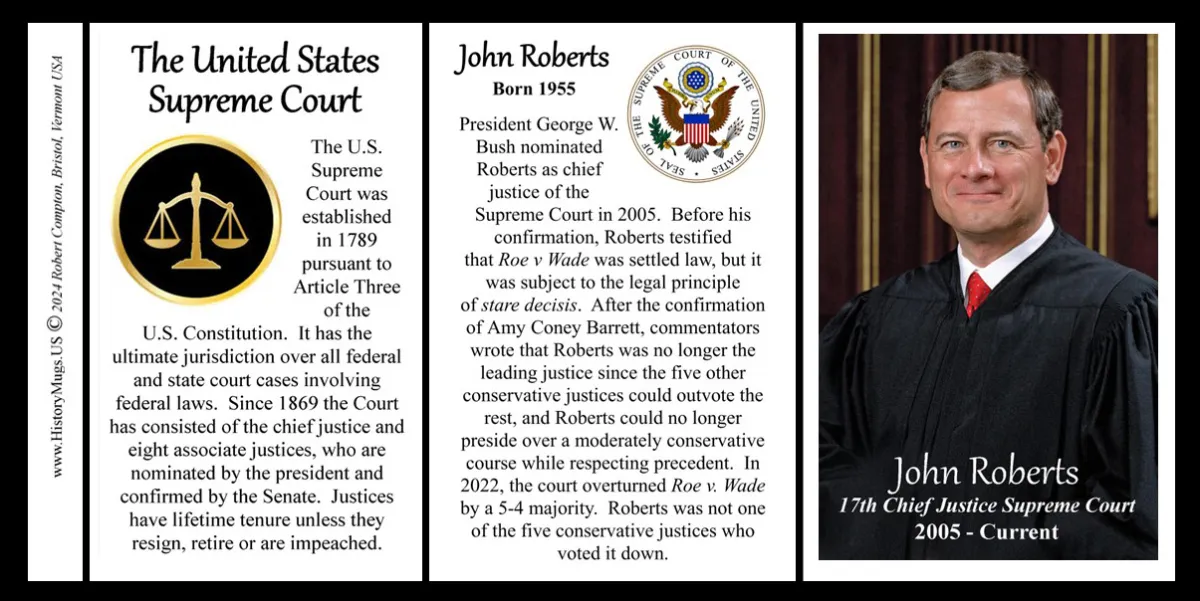 Photo: Chief Justice of the Supreme Court, via historymugs.us
Congressional oversight is similarly compromised. Most lawmakers lack security clearances to review FISA materials, and those who do are often prohibited from discussing what they learn. The House and Senate intelligence committees receive briefings, but their members frequently complain that these sessions provide little meaningful information about surveillance programs' scope or effectiveness.
The Justice Department's internal reviews have repeatedly found significant compliance problems. A 2019 audit discovered that FBI personnel had conducted over 3.3 million searches of Americans' communications in a single year, with minimal oversight and frequent violations of established procedures. These searches weren't based on individual FISA warrants — they were queries of databases populated through foreign surveillance programs that inevitably collect American communications.
The Bipartisan Failure
Perhaps most troubling is the bipartisan consensus that has allowed FISA abuses to continue unchecked. Republicans who criticized surveillance overreach during the Obama administration largely defended similar practices under Trump. Democrats who demanded FISA reforms under Trump have shown little interest in meaningful changes under Biden.
This political tribalism misses the fundamental constitutional issue. The problem isn't which party controls the surveillance apparatus — it's that the apparatus itself operates beyond effective democratic control. When political leaders from both parties can use secret courts to surveil their opponents, the very foundation of democratic accountability is at risk.
The Church Committee reforms of the 1970s were supposed to prevent exactly this kind of surveillance abuse. The FISA court was created as part of those reforms, designed to ensure that foreign intelligence gathering remained within constitutional bounds. Instead, it has become the mechanism through which those bounds are routinely exceeded.
 Photo: Church Committee, via uucw.org
National Security vs. Civil Liberty: A False Choice
The most pernicious argument for maintaining the current FISA system is that national security requires trading away civil liberties. This presents a false choice that the Founders would have rejected.
America faces real foreign threats that require sophisticated intelligence capabilities. But effective national security doesn't require abandoning constitutional principles — it requires working within them. Other democratic countries manage to protect their citizens from foreign threats without operating secret courts that rubber-stamp surveillance requests.
The real question isn't whether America needs foreign intelligence capabilities, but whether those capabilities should operate under meaningful judicial oversight. A court that approves 99.97% of government requests isn't providing oversight — it's providing cover.
Toward Real Reform
Meaningful FISA reform would require several fundamental changes. First, the court needs an adversarial process — defense attorneys with security clearances who can challenge government applications and protect Americans' rights. Second, the court's decisions should be subject to appellate review, not final and unreviewable. Third, surveillance authorities should sunset regularly, forcing Congress to reauthorize them based on demonstrated effectiveness and constitutional compliance.
Most importantly, Americans deserve to know the basic contours of surveillance programs conducted in their name. This doesn't mean revealing operational details or compromising sources and methods — it means providing enough information for democratic debate about the proper balance between security and liberty.
The FISA court's secrecy was supposed to protect intelligence operations, not shield government misconduct from public scrutiny. When secrecy becomes a tool for avoiding accountability rather than protecting security, it has outlived its constitutional purpose.
A government powerful enough to spy on foreign enemies without meaningful oversight is powerful enough to spy on domestic political opponents — and history suggests it eventually will.