The Americans the Open-Borders Lobby Doesn't Count: What Federal Data Actually Says About the Human Cost of Failed Immigration Enforcement

Photo: The White House, Public domain, via Wikimedia Commons
The Victims Who Don't Fit the Narrative
In the spring of 2024, Laken Riley, a 22-year-old nursing student at Augusta University, was murdered while jogging on the University of Georgia campus. The man charged with her killing, Jose Antonio Ibarra, had entered the United States illegally in 2022, been encountered by Customs and Border Protection, and released into the country pending immigration proceedings — a direct product of the catch-and-release policies that defined the Biden administration's border approach. Ibarra had also been arrested in New York City in 2023 on charges including acting in a manner injurious to a child, but was not reported to Immigration and Customs Enforcement due to that city's sanctuary policies.
 Photo: University of Georgia, via wallpapers.com
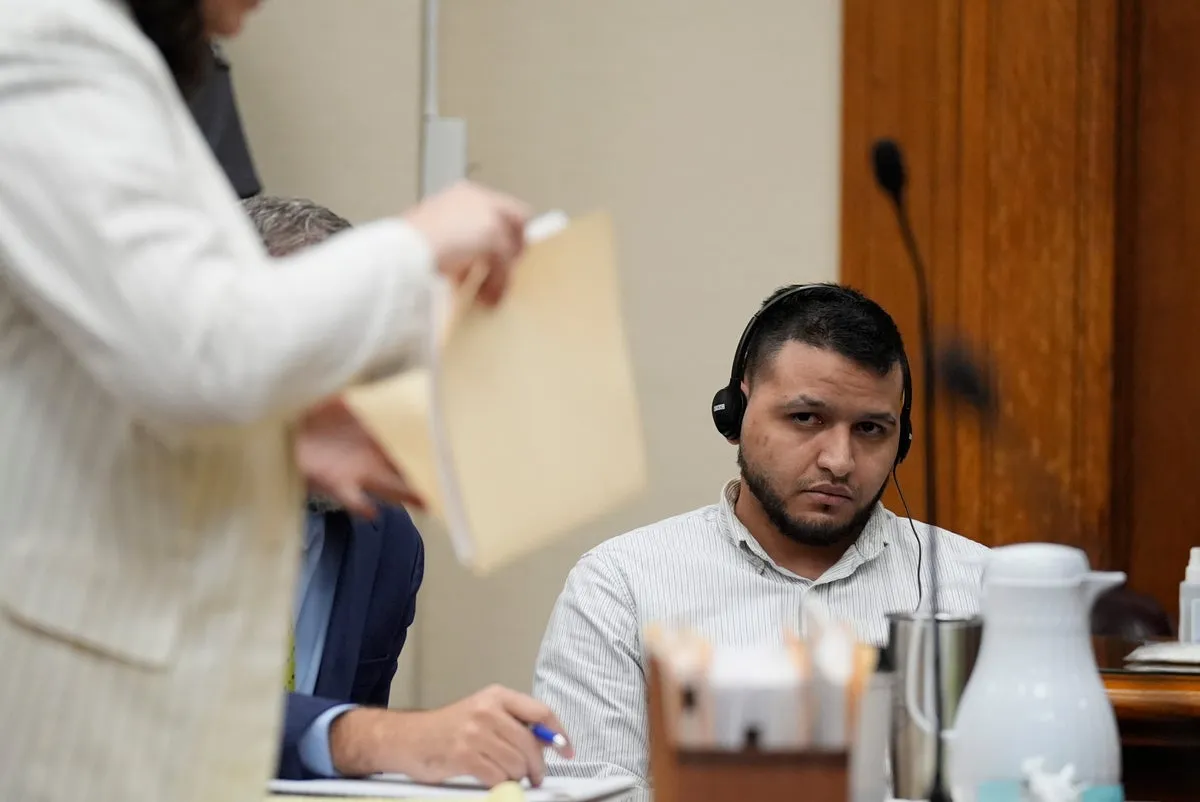 Photo: Jose Antonio Ibarra, via media.zenfs.com
 Photo: Laken Riley, via d.newsweek.com
Riley's case became a flashpoint precisely because it was so difficult to ignore — a young woman with a face, a name, a family, and a future that was extinguished by a failure of enforcement that was not accidental but deliberate. Yet for every Laken Riley whose story briefly breaks through the media filter, there are dozens of victims whose names never trend, whose families never testify before Congress, and whose deaths are absorbed into statistics that the press treats as too politically inconvenient to examine closely.
What the Government's Own Data Shows
The Government Accountability Office has examined this question directly. A 2011 GAO report — using data from the Department of Justice's Bureau of Justice Statistics — found that a study population of approximately 249,000 criminal aliens incarcerated in federal and state prisons and local jails had collectively been arrested roughly 1.7 million times and charged with nearly 3 million criminal offenses. Those offenses included approximately 70,000 sex crimes and 25,000 homicide-related charges.
Critics rightly note that these figures reflect arrests and charges, not convictions, and that comparing crime rates between populations requires careful methodological controls. Those caveats are legitimate and worth acknowledging. But the GAO data does not stand alone. The Center for Immigration Studies, drawing on data from the Texas Department of Public Safety — one of the few state agencies that systematically tracks criminal convictions by immigration status — has documented consistent patterns of criminal offending among individuals in the country illegally. Texas DPS data for 2022 showed that illegal immigrants in the state were convicted of over 1,600 homicides and nearly 1,200 sexual assaults over a multi-year tracking period.
The standard progressive rebuttal — that immigrants, including undocumented immigrants, commit crimes at lower rates than native-born Americans — deserves engagement rather than dismissal. Some peer-reviewed research does support this claim at the aggregate level, though the methodology is contested and the data sources are imperfect. But this argument, even taken at face value, is morally insufficient as a policy response. A group committing crimes at a lower rate than the general population still produces victims. And when those crimes are committed by individuals who were in the country illegally, or who had prior criminal records that should have triggered deportation, every single victim represents a preventable harm — a direct consequence of enforcement failures that the government chose to implement.
The question is not whether illegal immigrants as a class are more dangerous than the general population. The question is whether American citizens and legal residents have a right to expect their government to enforce the law in ways that prevent avoidable crimes. The answer to that question is obviously yes.
Sanctuary Policies and the Compounding of Failure
The Laken Riley case illustrates a second layer of the problem that the media's immigration coverage consistently underplays: the role of sanctuary jurisdictions in shielding criminal aliens from deportation. Sanctuary policies — which vary in scope but generally prohibit local law enforcement from honoring ICE detainer requests or sharing information about criminal aliens with federal authorities — create a systematic mechanism by which individuals with prior criminal records remain in the country after they could and should have been removed.
In fiscal year 2023, ICE reported that sanctuary jurisdictions declined more than 6,000 detainer requests. These were not arbitrary requests targeting otherwise law-abiding individuals — detainers are generally issued for individuals who have been arrested on criminal charges. The people released back into communities over federal objection include individuals charged with assault, drug trafficking, domestic violence, and sexual offenses.
The political logic of sanctuary policies is clear enough: they reflect a judgment by local officials that the costs of cooperation with federal immigration enforcement — including potential damage to trust between immigrant communities and local police — outweigh the benefits. That is a legitimate policy debate. But it is a debate that requires honest accounting of the other side of the ledger, including the crimes committed by individuals who were released when a detainer would have removed them from the community.
Selective Empathy Is Not Journalism
The mainstream media's approach to immigration coverage reflects a choice — not a neutral one, but an editorial decision about whose suffering counts as a story. Migrant deaths at the border receive extensive, humanizing coverage. The conditions in detention facilities are scrutinized intensively and appropriately. The hardships of individuals brought to the United States as children are covered with genuine emotional depth.
None of that coverage is wrong. The humanitarian dimensions of immigration are real and deserve serious attention. But journalism that covers one set of human costs while systematically minimizing another is not neutral reporting — it is advocacy with a byline. The families of Americans killed by individuals who had prior deportation orders, or who had been released under catch-and-release policies, or who were shielded by sanctuary jurisdictions, are not props in a political argument. They are citizens whose government failed them, and their stories deserve the same moral weight as any other victim's.
The conservative position on immigration is not, at its core, about hostility to migrants as human beings. It is about the government's primary and non-negotiable obligation to its own citizens — an obligation that includes enforcing the laws that exist, removing individuals who commit crimes after entering illegally, and not implementing policies that predictably produce preventable victims.
What a Honest Reckoning Requires
A serious national debate about immigration policy requires several things that the current media environment does not consistently provide: transparent reporting of federal crime data broken down by immigration status; honest coverage of the consequences of sanctuary policies; and the same humanizing attention to American victims of immigration enforcement failures that is routinely extended to migrants.
It also requires policymakers to stop treating border enforcement as a binary choice between mass deportation and open borders. The enforcement infrastructure that existed before it was systematically dismantled — including consistent application of detainer requests, expedited removal proceedings, and consequences for illegal reentry — represented a middle path that protected both the humanitarian interests of migrants and the security interests of American communities.
A government that cannot name its own citizens' killers without political hesitation has not merely failed at border security — it has failed at the most fundamental obligation of sovereign governance.