Washington's Favorite Cost-Shifting Scam: How the Unfunded Mandates Reform Act Became a Paper Tiger
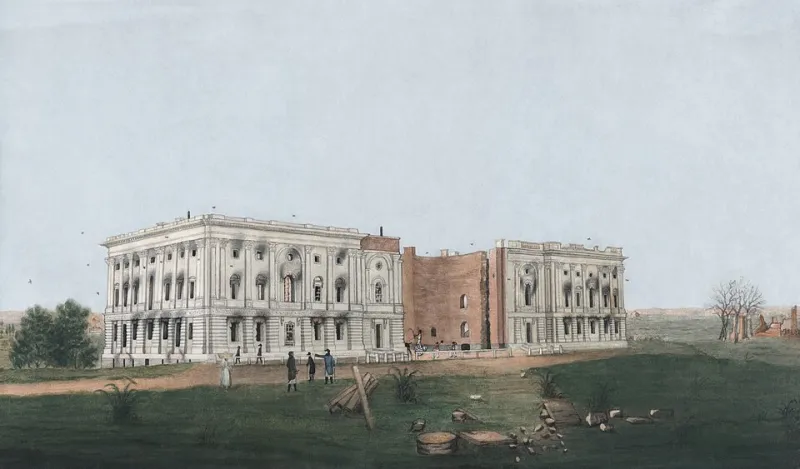
Photo: George Munger, Public domain, via Wikimedia Commons
Washington's Favorite Cost-Shifting Scam: How the Unfunded Mandates Reform Act Became a Paper Tiger
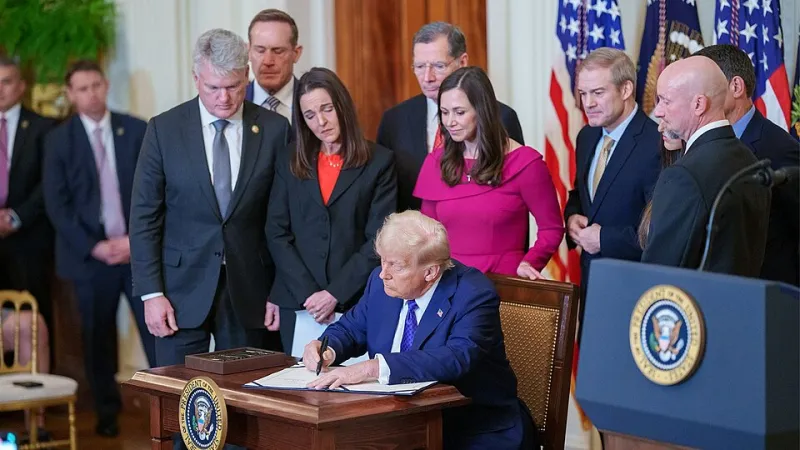
In January 1995, the newly elected Republican majority in Congress moved quickly on one of the central promises of the Contract with America. The Unfunded Mandates Reform Act — UMRA — passed with overwhelming bipartisan support and was signed into law by President Bill Clinton. The pitch was simple and compelling: the federal government had developed a habit of passing ambitious legislation, taking the credit, and then handing the bill to state governments, local municipalities, and private businesses that had no say in the matter. UMRA would end that practice by requiring the Congressional Budget Office to score the costs of any federal mandate exceeding certain thresholds before a bill could advance. For a brief moment, fiscal conservatives believed Washington had finally installed a circuit breaker on its most irresponsible habit.
They were wrong. Thirty years on, UMRA stands as one of the most instructive examples of how Washington reforms itself without actually changing anything — a lesson in the gap between legislative intent and institutional reality that every taxpayer and every state budget director understands intimately.
What UMRA Was Supposed to Do
The law established two primary requirements. First, the CBO must prepare a cost estimate for any legislation that would impose mandates on state, local, or tribal governments exceeding $50 million annually (a threshold later adjusted for inflation to approximately $100 million in more recent years). Second, for mandates on the private sector exceeding $100 million annually (similarly adjusted), the CBO must also provide an estimate. If a bill crossed those thresholds without an adequate funding mechanism, a point of order could be raised on the floor to block it.
On paper, that sounds meaningful. In practice, it has the enforcement power of a strongly worded suggestion.
The Workarounds Washington Mastered Immediately
Congress learned to neutralize UMRA almost from the moment it was enacted. The most straightforward method is also the most brazen: a simple majority vote can waive the point of order entirely. This is not a loophole — it is a front door. Lawmakers who want to pass a mandate-heavy bill need only agree among themselves to set aside the procedural objection, and UMRA's primary enforcement mechanism evaporates. The law, in other words, relies on Congress to police Congress, which is roughly as effective as asking the IRS to audit itself.
Beyond the waiver problem, UMRA contains categorical exemptions broad enough to drive a budget deficit through. Mandates tied to conditions of federal grant funding are excluded. Constitutional mandates are excluded. Anti-discrimination laws are excluded. The practical effect is that some of the most expensive federal requirements imposed on states — including substantial portions of Medicaid, the Americans with Disabilities Act's administrative requirements, and a range of environmental regulations — either fall outside UMRA's scope entirely or are structured in ways that technically avoid triggering its thresholds.
The regulatory end-run deserves particular attention. UMRA applies to legislation, but a significant and growing share of federal mandates arrive not through acts of Congress but through agency rulemaking. Executive branch agencies — the EPA, the Department of Labor, the Department of Health and Human Services — routinely issue regulations that impose enormous compliance costs on states and the private sector. UMRA's reach into the regulatory process is limited and largely aspirational. The Office of Management and Budget is supposed to coordinate agency compliance, but OMB works for the president, not for the states bearing the costs.
The Numbers Tell the Story
The Government Accountability Office has conducted multiple reviews of UMRA's effectiveness over the years, and the findings are consistently deflating. A 2004 GAO report found that CBO had identified relatively few bills exceeding UMRA's thresholds, in part because of the exemptions described above, and that points of order were rarely raised even when thresholds were crossed. A 2011 report reached similar conclusions. Meanwhile, the actual cost of federal mandates on state and local governments has continued to climb. The National Conference of State Legislatures and various state budget offices have documented mandate-related compliance burdens running into the hundreds of billions of dollars annually — costs borne by property taxpayers, state income taxpayers, and local businesses that had no representation in the congressional committees that created those obligations.
Medicaid alone illustrates the scale of the problem. Federal Medicaid requirements dictate eligibility standards, benefit structures, and administrative procedures that states must follow to receive federal matching funds. States are nominally free to decline participation, but in practice no state can absorb the political and fiscal consequences of exit. The result is a system in which Washington sets the rules, and states — meaning state taxpayers — absorb a significant share of the costs. UMRA's conditions-of-federal-assistance exemption means this entire structure is invisible to the law's accounting.
The Strongest Counterargument — and Why It Falls Short
Defenders of the current system make a reasonable point: federalism is complicated, and some federal-state cost-sharing arrangements reflect genuine policy partnerships rather than pure federal imposition. Medicaid, for instance, does provide substantial federal matching funds; states are not simply handed an unfunded bill. Environmental regulations often address genuine interstate externalities that states cannot manage unilaterally.
These points have merit as far as they go. But they do not address the core problem, which is one of accountability and consent. When Washington imposes requirements that states must implement and partially fund, without a genuine mechanism for states to object, modify, or opt out at manageable cost, the federal-state partnership becomes a fiction. States become administrative subcontractors for federal policy, responsible for the political heat of implementation while Washington claims the credit for the program's ambitions. That is not partnership — it is cost externalization with extra steps.
What Real Reform Would Require
A genuinely effective successor to UMRA would need three things that the current law lacks. First, a supermajority threshold for waiving mandate-related points of order, rather than a simple majority — making it meaningfully harder, not cosmetically harder, to override the check. Second, full coverage of regulatory mandates, with the same CBO scoring requirements applied to significant agency rules as to legislation. Third, and most importantly, a judicial enforcement mechanism that gives states and affected parties standing to challenge mandate-imposing regulations in federal court when proper cost accounting has not been performed.
Without judicial teeth, any legislative reform is ultimately dependent on Congress's willingness to discipline itself — and thirty years of evidence suggests that willingness does not exist. Courts have generally declined to enforce UMRA requirements as judicially cognizable rights, treating the law as an internal congressional procedure rather than a substantive legal constraint. Changing that interpretation, either through statute or through litigation strategy, is the missing ingredient.
Until Washington is legally compelled to account for every dollar it shifts onto states and taxpayers, the Unfunded Mandates Reform Act will remain what it has always been: a press release dressed up as a law.