The First Amendment Protects a Free Press — Not a Privileged One: How Legacy Media Turned a Liberty Into a License
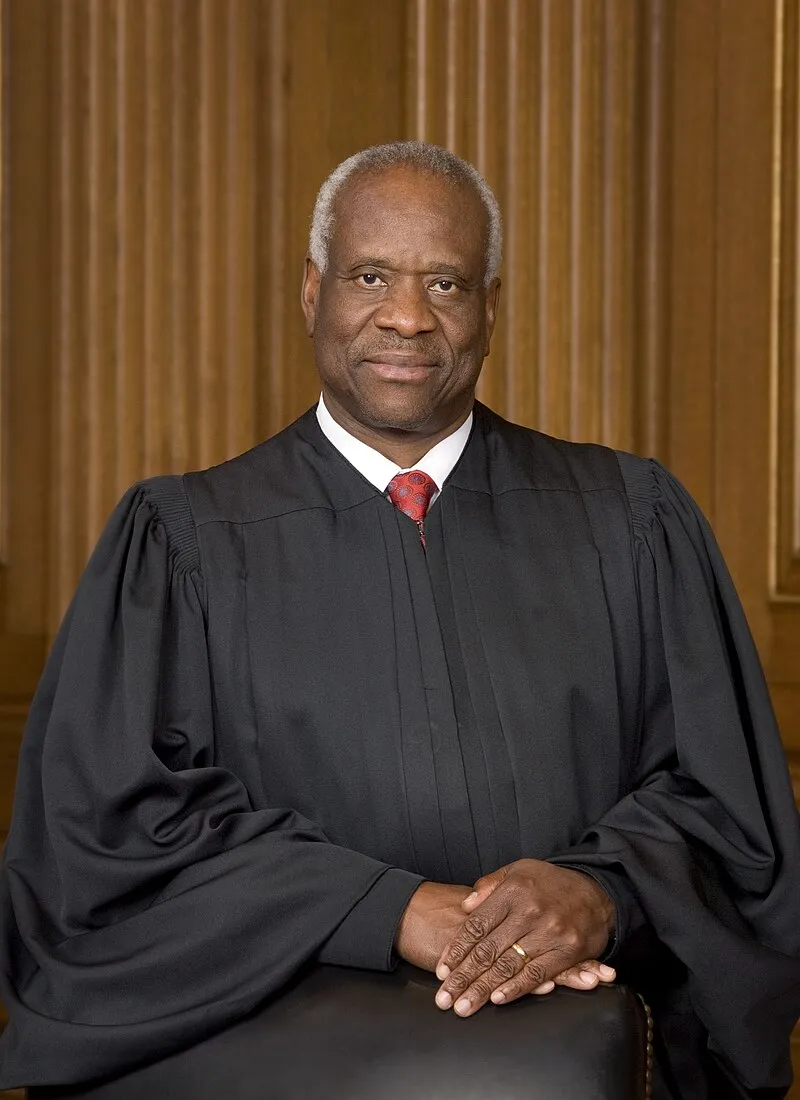
Photo of Clarence Thomas, via Wikimedia Commons
What the Founders Actually Meant by "the Press"
When James Madison drafted the First Amendment, the "press" he had in mind was not ABC News, The New York Times, or a cable network with a $20 billion market capitalization. It was a printing press — a physical device that any citizen with sufficient resources and courage could use to publish pamphlets, broadsides, and newspapers. The press freedom the Founders enshrined was, at its core, a citizen's right: the right to publish without prior government restraint, to criticize power without fear of prosecution, to participate in the marketplace of ideas on equal footing with whoever happened to hold office.
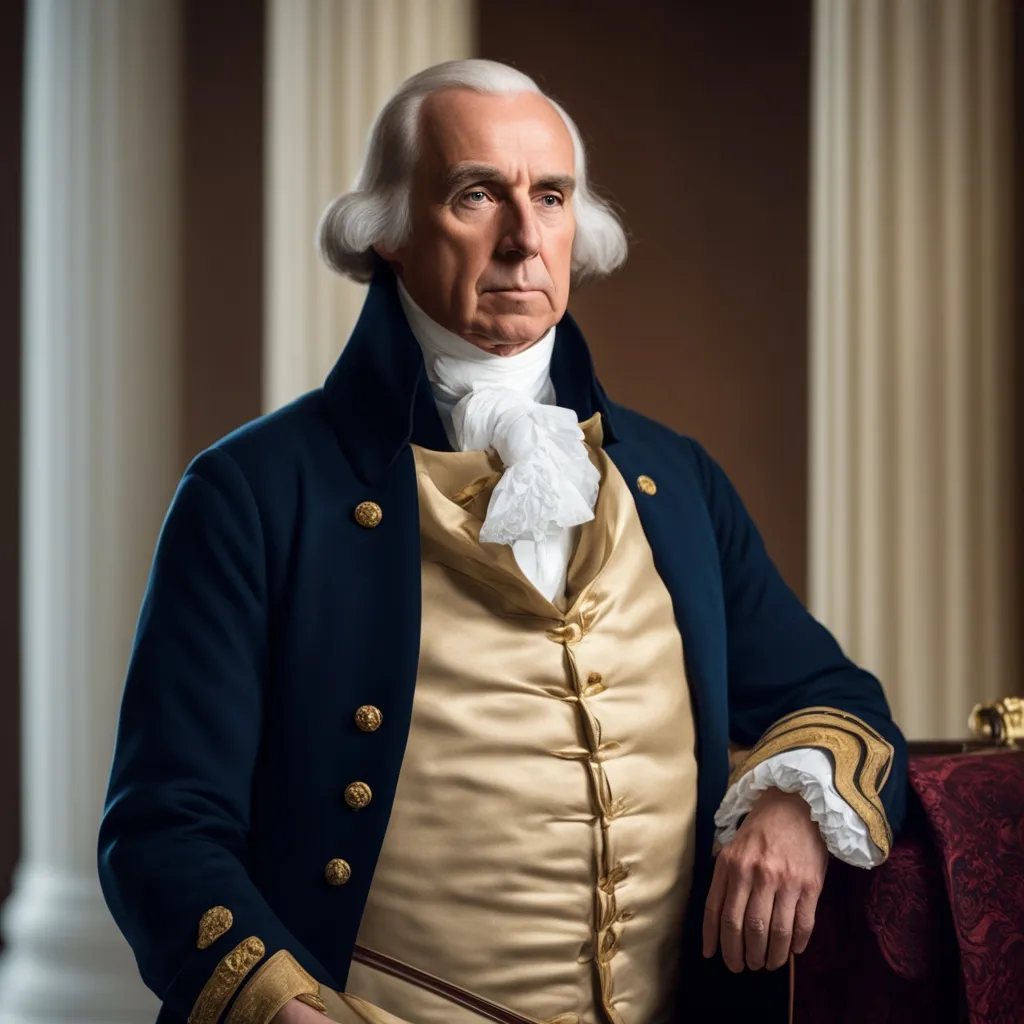 Photo: James Madison, via images.deepai.org
That original vision has been almost entirely inverted. Today, "press freedom" is routinely invoked not as a shield for citizen journalists, independent commentators, and dissenting voices — but as a constitutional fortress protecting a small number of powerful institutional actors from scrutiny, legal accountability, and competitive pressure. The First Amendment, designed to democratize speech, has been quietly reinterpreted to privilege a credentialed class.
This distortion did not happen overnight. It was built through decades of favorable jurisprudence, regulatory carve-outs, and cultural assumptions that treat institutional journalism as inherently more legitimate than any other form of public commentary. The result is a media landscape where the largest and most politically influential news organizations claim constitutional protection while operating, in practice, as advocacy arms for one side of the political spectrum.
The Sullivan Problem
No legal development has done more to insulate the institutional press from accountability than New York Times Co. v. Sullivan (1964). The Supreme Court's ruling in that case established the "actual malice" standard for defamation claims brought by public figures: to win a libel suit, a public official — and later, by extension, any public figure — must prove not merely that a published statement was false and damaging, but that the publisher either knew it was false or acted with "reckless disregard" for the truth.
The intent behind Sullivan was defensible. The case arose from a civil rights-era lawsuit in Alabama that was transparently designed to use defamation law as a tool to silence journalists covering the civil rights movement. The Court was right to be concerned about state-level defamation litigation being weaponized to suppress legitimate reporting on matters of public concern.
But the standard the Court created has metastasized far beyond that narrow purpose. "Actual malice" is extraordinarily difficult to prove — deliberately so. In practice, it means that major media organizations can publish stories that are demonstrably false, that destroy reputations, that are based on sources with obvious political motivations, and face virtually no legal consequence as long as they maintain plausible deniability about their own state of mind. The standard does not protect truth. It protects carelessness, and in some cases, it effectively protects deliberate distortion.
Justice Clarence Thomas has called for the Court to reconsider Sullivan — arguing in his concurrence in McKee v. Cosby (2019) that the actual malice standard has no basis in the original meaning of the First Amendment and was essentially invented by the Warren Court. Several other legal scholars across the ideological spectrum have noted that the standard, as currently applied, creates a significant asymmetry: powerful media institutions are nearly lawsuit-proof, while the individuals and organizations they cover have little practical recourse when coverage is false.
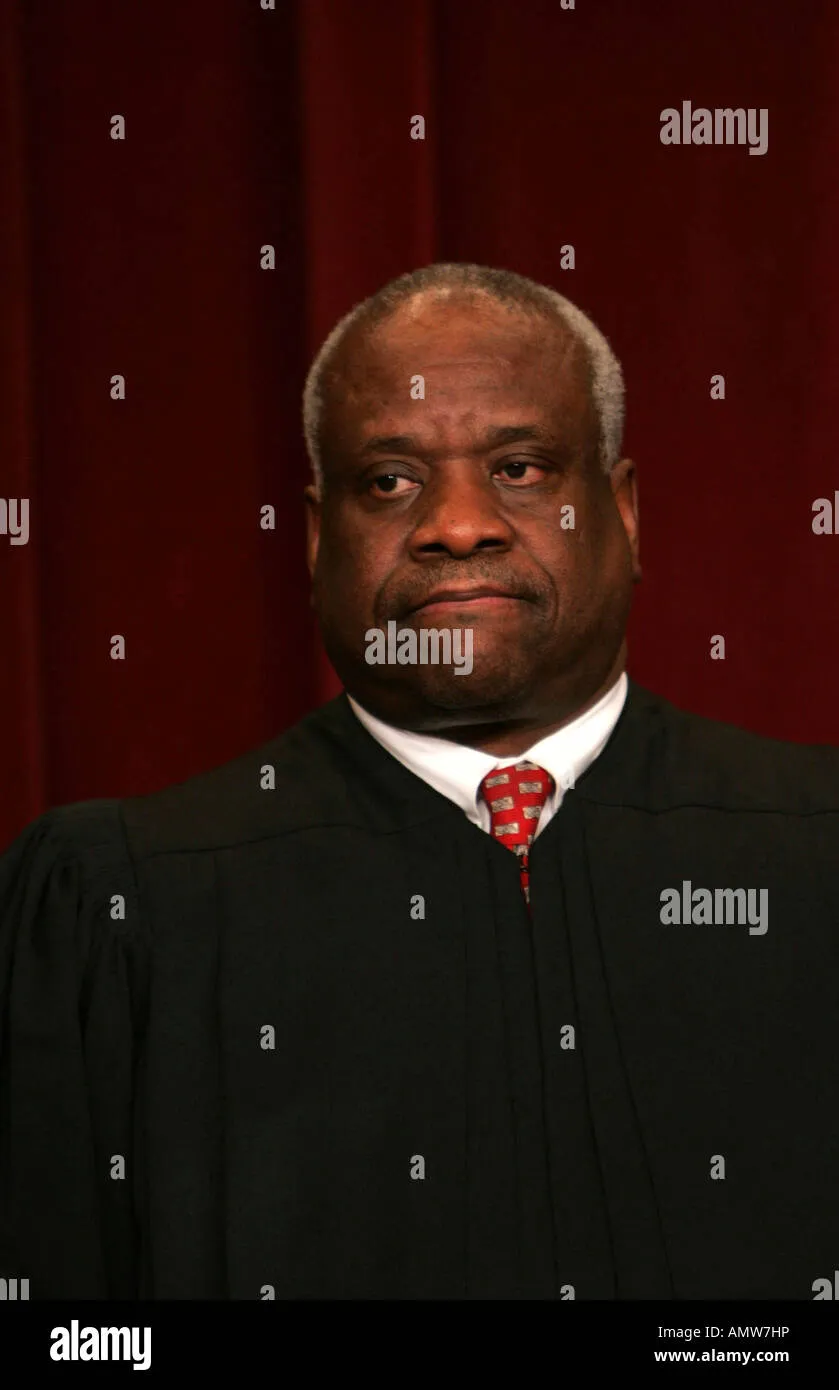 Photo: Justice Clarence Thomas, via c8.alamy.com
That asymmetry is not press freedom. It is press privilege.
Selective Outrage and the Double Standard
The institutional press's claim to First Amendment protection would be more credible if it were applied consistently. It is not.
When legacy media organizations face scrutiny — subpoenas for sources, access restrictions, government criticism — the response is immediate and operatic. Press freedom is invoked, the Society of Professional Journalists issues statements, and First Amendment scholars line up to condemn the threat to democracy. The coverage is wall-to-wall.
But when independent journalists, conservative commentators, or citizen reporters face deplatforming, demonetization, advertiser boycotts, or coordinated suppression by tech platforms — often at the explicit or implicit encouragement of legacy media organizations themselves — the same institutional press is conspicuously silent. The organizations that claim the mantle of press freedom have spent years lobbying social media companies to restrict the reach of their competitors, celebrating the removal of voices they disagree with, and framing independent journalism as "misinformation" when it challenges their preferred narratives.
This is not a minor inconsistency. It reveals that what legacy media is defending is not press freedom as a principle — it is press freedom as a market position. The First Amendment, in their telling, protects established institutions with journalism school credentials and advertising relationships. Everyone else is on their own.
The Credentialism Trap
One of the most insidious developments in this space is the growing push for formal journalist credentialing systems — backed, in various forms, by government agencies, congressional proposals, and media industry groups. The logic is seductive: in an era of widespread online misinformation, shouldn't we distinguish "real" journalists from random people with a Twitter account?
The answer, constitutionally, is no — and the reason goes to the heart of what the First Amendment is for. The moment the government or any government-adjacent body gains the authority to determine who qualifies as a legitimate journalist, press freedom becomes a licensed privilege rather than a universal right. History is not ambiguous on this point: every authoritarian government that has ever existed has preferred a press it could credential over one it could not control.
The conservative position here is not anti-journalism. It is pro-liberty. A free press means a press free from government definition, government licensing, and government preference. That principle protects The New York Times and a blogger in rural Ohio with equal force — which is exactly how it should be.
What a Level Playing Field Looks Like
Restoring genuine press freedom — as opposed to the institutional variety — requires several concrete steps.
First, the Supreme Court should seriously reconsider the actual malice standard, or at minimum clarify its application to prevent it from functioning as blanket immunity for reckless or bad-faith reporting. This does not mean making it easy to sue reporters for honest mistakes. It means ensuring that deliberate falsehoods about public figures carry real legal consequences.
Second, Congress should resist any effort to create formal journalist credentialing systems, whether administered directly by the government or by government-chartered bodies. Press freedom belongs to the citizen, not the institution.
Third, antitrust scrutiny of the relationships between legacy media organizations and major technology platforms deserves serious attention. The coordination between established media and social media companies to restrict the reach of disfavored voices is not a private business decision — it is the functional equivalent of a cartel operating against competition in the marketplace of ideas.
None of these proposals are hostile to journalism. They are hostile to a system in which a small number of powerful organizations have captured the constitutional language of press freedom and turned it into a shield against the accountability they purport to apply to everyone else.
The Verdict
A free press is one of the republic's most essential safeguards — but the press is only free when its constitutional protections belong to every citizen equally, not just to the corporations wealthy and connected enough to claim them.