The Contracts Clause Was the Constitution's Promise to Business — Washington Broke It and Called It Progress

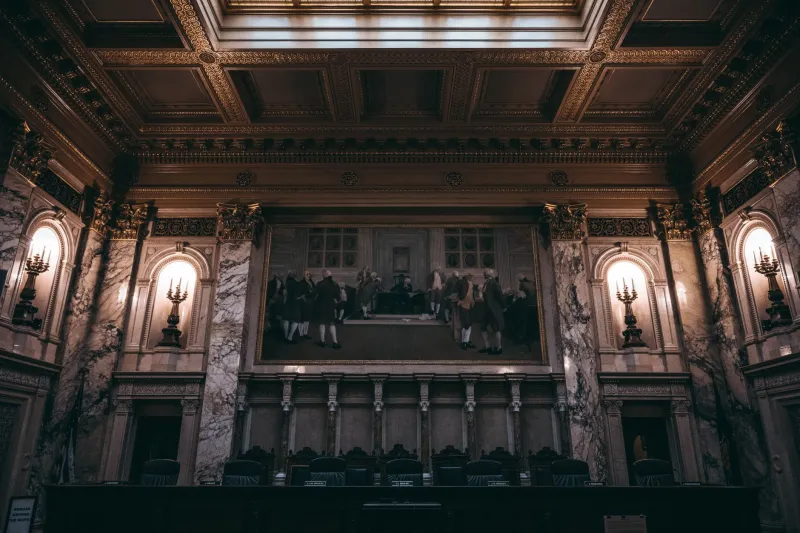
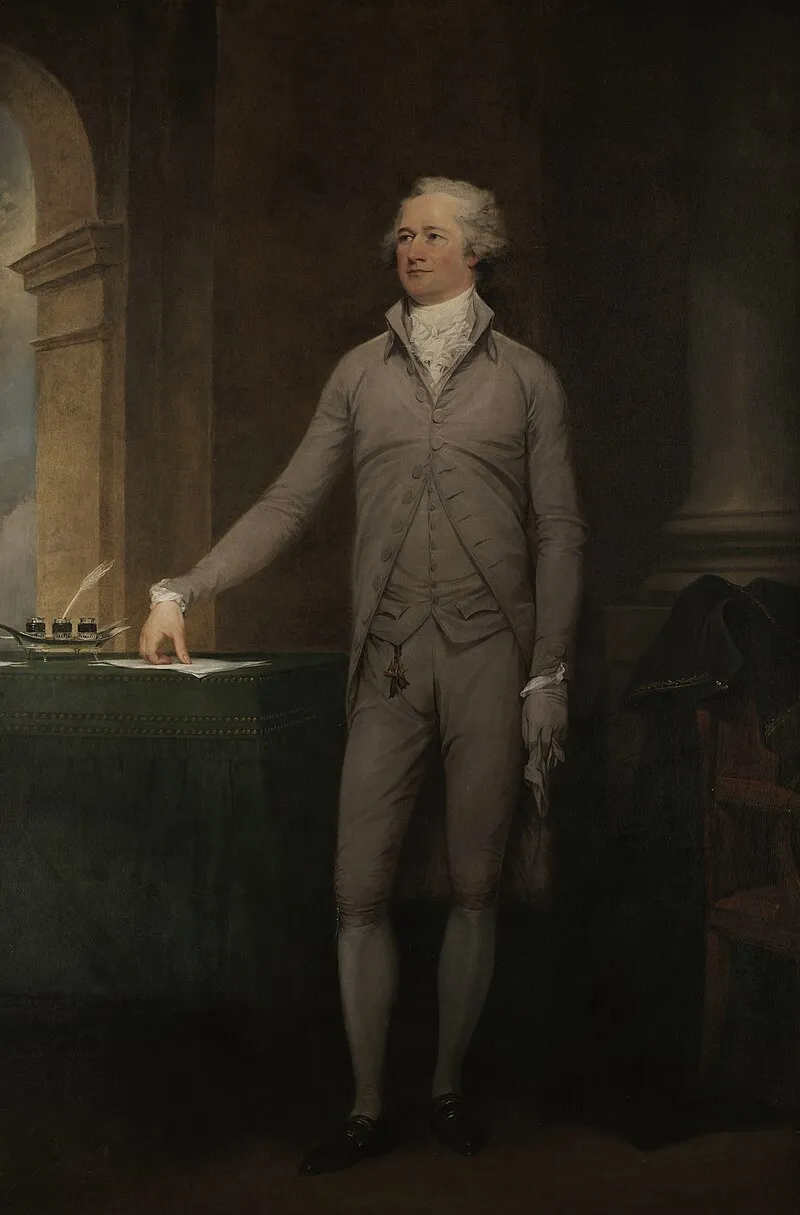
Photo of John Marshall, via Wikimedia Commons
A Clause Born From Chaos
Before the Constitution existed, American commerce was a nightmare. Under the Articles of Confederation, state legislatures routinely passed laws that voided private debts, rewrote mortgage terms, and retroactively altered contracts between private parties — usually under the pretense of helping struggling debtors or serving some loosely defined public good. Creditors had no recourse. Investors had no security. The economy reflected the disorder: capital dried up, trade stalled, and trust between contracting parties collapsed.
The Founders had seen enough. When they convened in Philadelphia in 1787, one of their clearest mandates was to stop state governments from using legislative power as a weapon against private agreements. The result was Article I, Section 10 — the Contracts Clause — which states plainly that no state shall pass any "Law impairing the Obligation of Contracts." It was not ambiguous. It was not qualified. It was a constitutional promise: make a deal, and the government cannot unmake it on your behalf.
For roughly the first century and a half of American history, that promise held. The Supreme Court under Chief Justice John Marshall enforced the clause aggressively. In Fletcher v. Peck (1810) and Dartmouth College v. Woodward (1819), the Court made clear that contracts — whether between private parties or between citizens and the state — carried genuine constitutional protection. Business investment, infrastructure development, and interstate commerce all expanded in part because entrepreneurs could rely on the legal enforceability of their agreements.
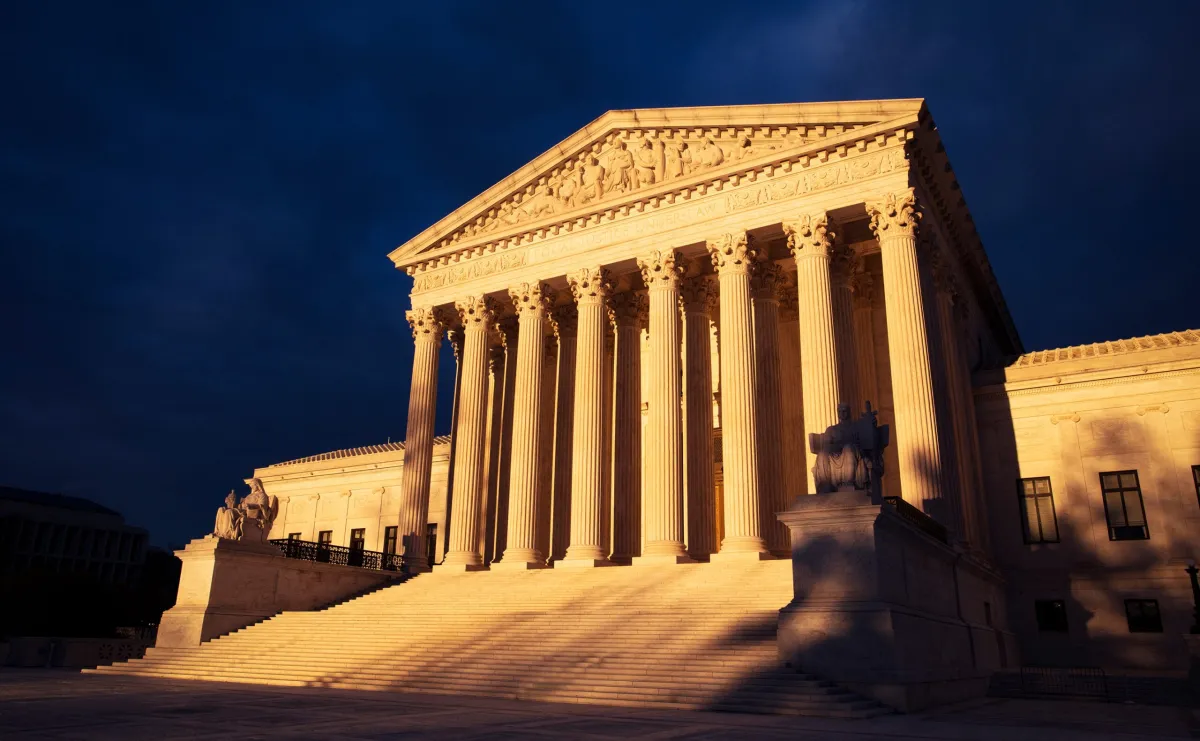 Photo: Supreme Court, via katiecouric.com
The New Deal and the Death of a Guarantee
Then came the Great Depression, the New Deal, and the Supreme Court's famous capitulation to FDR's political pressure. In Home Building & Loan Association v. Blaisdell (1934), the Court upheld a Minnesota law that allowed courts to extend mortgage redemption periods — effectively rewriting the terms of existing loan contracts. The majority argued that the economic emergency justified the intrusion, and that the Contracts Clause had to be balanced against the state's "police powers."
It was a fateful pivot. Once the Court established that economic emergencies could override contractual obligations, the exception became the rule. Legislatures discovered that virtually any regulatory justification — public welfare, consumer protection, environmental necessity, public health — could be dressed up as sufficient grounds to modify or nullify private agreements. Courts largely deferred.
By the latter half of the twentieth century, the Contracts Clause had been reduced to what legal scholars sometimes call a "dead letter" — technically present in the Constitution, but functionally inert. The test that emerged from Allied Structural Steel Co. v. Spannaus (1978) offered some modest protection, requiring courts to assess whether a contractual impairment was substantial and whether the government's interest was legitimate and necessary. In practice, however, governments rarely lose these cases. The standard is pliable enough to justify almost any intervention a sufficiently creative legislature can dream up.
What Regulatory Overreach Actually Costs
The practical damage is not abstract. Consider what happens when investors, developers, or businesses cannot trust that the terms of their agreements will survive the next election cycle or the next regulatory wave.
In recent years, state and federal governments have unilaterally altered the terms of private contracts in areas ranging from rental agreements — during the COVID-19 eviction moratorium period — to pension obligations, energy contracts, and pharmaceutical pricing arrangements. Each intervention was packaged as a public good. Each one quietly communicated to the market that no private agreement is truly safe from government revision.
The eviction moratorium cases are particularly instructive. When the CDC issued a nationwide moratorium on residential evictions in 2020, it effectively voided the payment obligations embedded in millions of private lease agreements — not through legislation, not through negotiation, but through executive fiat. The Supreme Court ultimately struck down the CDC's authority in Alabama Association of Realtors v. HHS (2021), but the damage to landlords, many of them small investors, was already done. The constitutional protection that should have prevented the policy from being enacted in the first place was never seriously invoked.
The Strongest Counter-Argument — And Why It Fails
The most serious defense of the modern approach is that absolute contract enforcement produces unjust outcomes in genuine emergencies. If a global pandemic forces millions of Americans out of work overnight, the argument goes, rigidly enforcing lease agreements causes social harm disproportionate to the benefit of protecting contractual expectations. Flexibility, in this view, is a feature of a humane legal system, not a bug.
It is a reasonable concern, and it deserves a direct answer. The Founders were not naive about emergencies. They had lived through a revolution. What they understood — and what the Blaisdell majority failed to adequately weigh — is that a government empowered to rewrite contracts during emergencies will never stop finding emergencies. The emergency exception does not expire. It expands. And once it is accepted that the state may override private agreements whenever it deems the public interest sufficiently compelling, then private agreements are no longer agreements at all — they are provisional arrangements subject to perpetual renegotiation by whoever holds political power.
The correct response to genuine economic hardship is targeted public assistance funded through appropriations, not the confiscation of private contractual rights without compensation. The distinction matters enormously: one approach spends public money to solve a public problem; the other forces private parties to subsidize a public goal without their consent and without reimbursement.
Why Revival Matters Now
The Contracts Clause is not merely a historical curiosity. Its erosion has direct consequences for the investment climate, the reliability of long-term business planning, and the foundational principle that agreements between consenting parties carry legal weight. When pension funds are restructured by municipal governments to avoid fiscal reckoning, when energy companies find their contracts nullified by new environmental mandates, when landlords discover their leases are unenforceable by regulatory decree, the message is consistent: the government's preferences outrank your rights.
A genuine revival of Contracts Clause jurisprudence would not require the courts to ignore all public interests. It would require them to take seriously the constitutional text that the Founders included precisely because they had watched governments abuse this kind of power before. The standard should be demanding: substantial impairment of a contract should require more than a plausible public rationale — it should require proof that no less intrusive alternative was available, and it should trigger just compensation where private parties bear disproportionate burdens.
Some conservative legal scholars, including those associated with originalist jurisprudence, have argued that the Court's current four-factor balancing test under Spannaus is insufficient and should be replaced with something closer to the clause's original force. That argument deserves a serious hearing at the Supreme Court level — particularly as regulatory agencies continue to expand the scope of what qualifies as a legitimate public interest.
The Verdict
When government can rewrite the terms of any agreement the moment politics demands it, the word "contract" loses its meaning — and with it, the foundation of every market, every investment, and every promise made in commerce.