The Contracts Clause Was the Founders' Bulwark Against Government Confiscation — States Have Been Shredding It for a Century
The Contracts Clause Was the Founders' Bulwark Against Government Confiscation — States Have Been Shredding It for a Century
The men who wrote the Constitution had lived through economic chaos. They had watched state legislatures in the 1780s pass debtor-relief laws, suspend debt collection, and retroactively rewrite the terms of private contracts whenever creditors became politically inconvenient. They understood, from hard experience, that a government empowered to void private agreements on a whim is a government that can seize the fruits of any economic arrangement it dislikes. Their answer was Article I, Section 10 — the Contracts Clause — which declares plainly that "No State shall... pass any... Law impairing the Obligation of Contracts."
For roughly a century and a half, that provision carried real constitutional weight. Today, it is a shadow of its original self — gutted by a Depression-era Supreme Court decision, exploited by state governments of every political stripe, and largely ignored by a legal academy that finds property rights philosophically inconvenient. The story of how the Contracts Clause went from constitutional cornerstone to constitutional curiosity is a case study in how crisis becomes pretext, and how pretext becomes permanent.
What the Founders Actually Intended
The Framers were not abstract theorists when they drafted the Contracts Clause. They were responding to a specific and recent outrage: the wave of state "stay laws" and "tender laws" that had swept the young republic after the Revolutionary War, allowing debtors to delay repayment indefinitely or satisfy debts with depreciated currency at face value. These laws did not merely inconvenience creditors — they destroyed the predictability on which commerce depends. James Madison identified the problem with characteristic precision in Federalist No. 44, describing such laws as an "extensive... evil" that undermined the "confidence essential to all commercial intercourse."
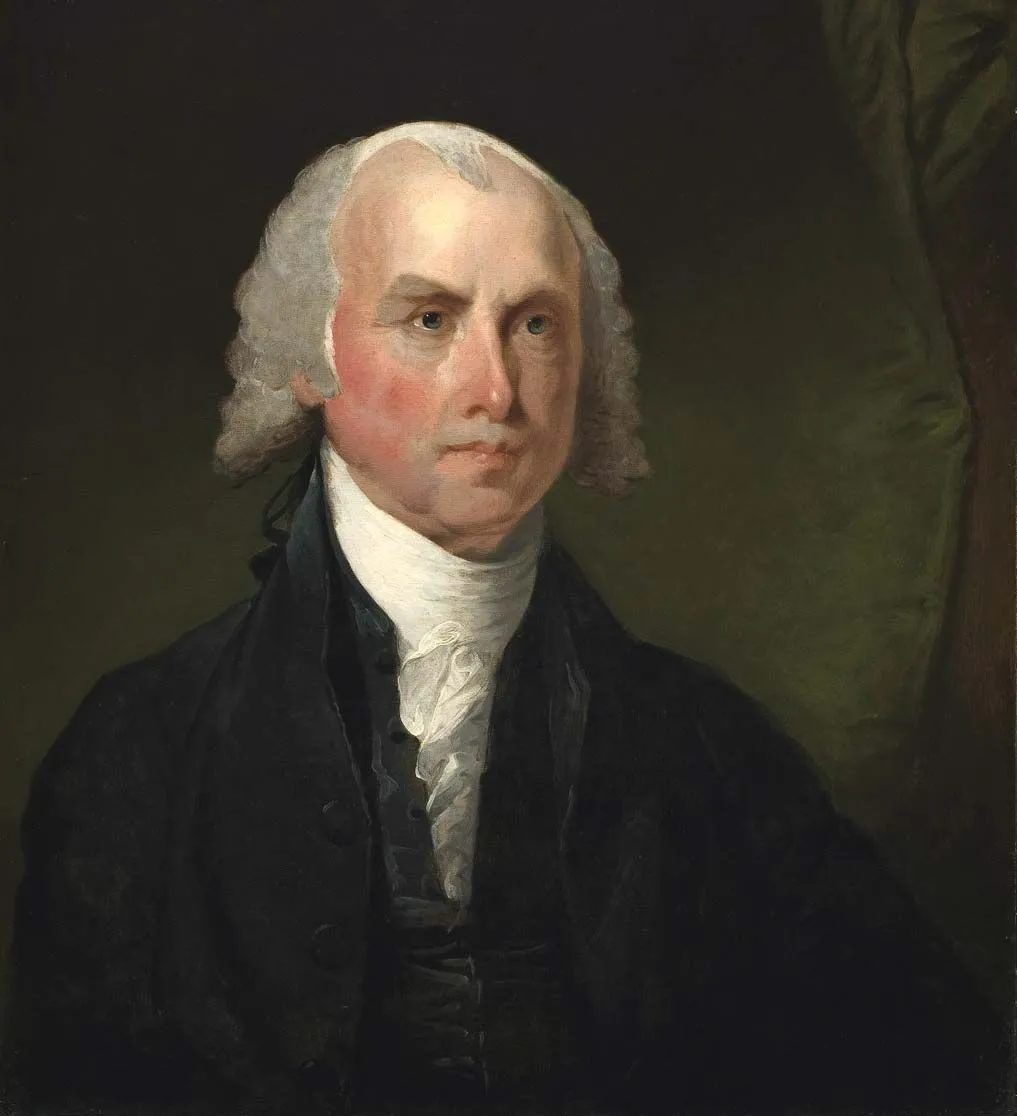 Photo: James Madison, via cdn.britannica.com
The clause was meant to be a hard stop. Private parties could negotiate whatever terms they wished, and the state could not subsequently rewrite those terms to favor one side over the other. This was not a minor procedural protection — it was a foundational guarantee that the rules governing private economic life would not be subject to legislative revision every time a sufficiently sympathetic constituency demanded relief.
The 1934 Turning Point
The clause held, more or less, until the Great Depression broke it. In Home Building & Loan Association v. Blaisdell (1934), the Supreme Court upheld a Minnesota mortgage moratorium law that allowed courts to extend the redemption period for distressed homeowners — effectively altering the contractual rights of lenders in ways the original contract had not contemplated. Chief Justice Charles Evans Hughes, writing for a 5-4 majority, reasoned that the "economic interests of the State may justify the exercise of its continuing and dominant protective power" even over existing contracts, provided the impairment was reasonable and aimed at a legitimate public purpose.
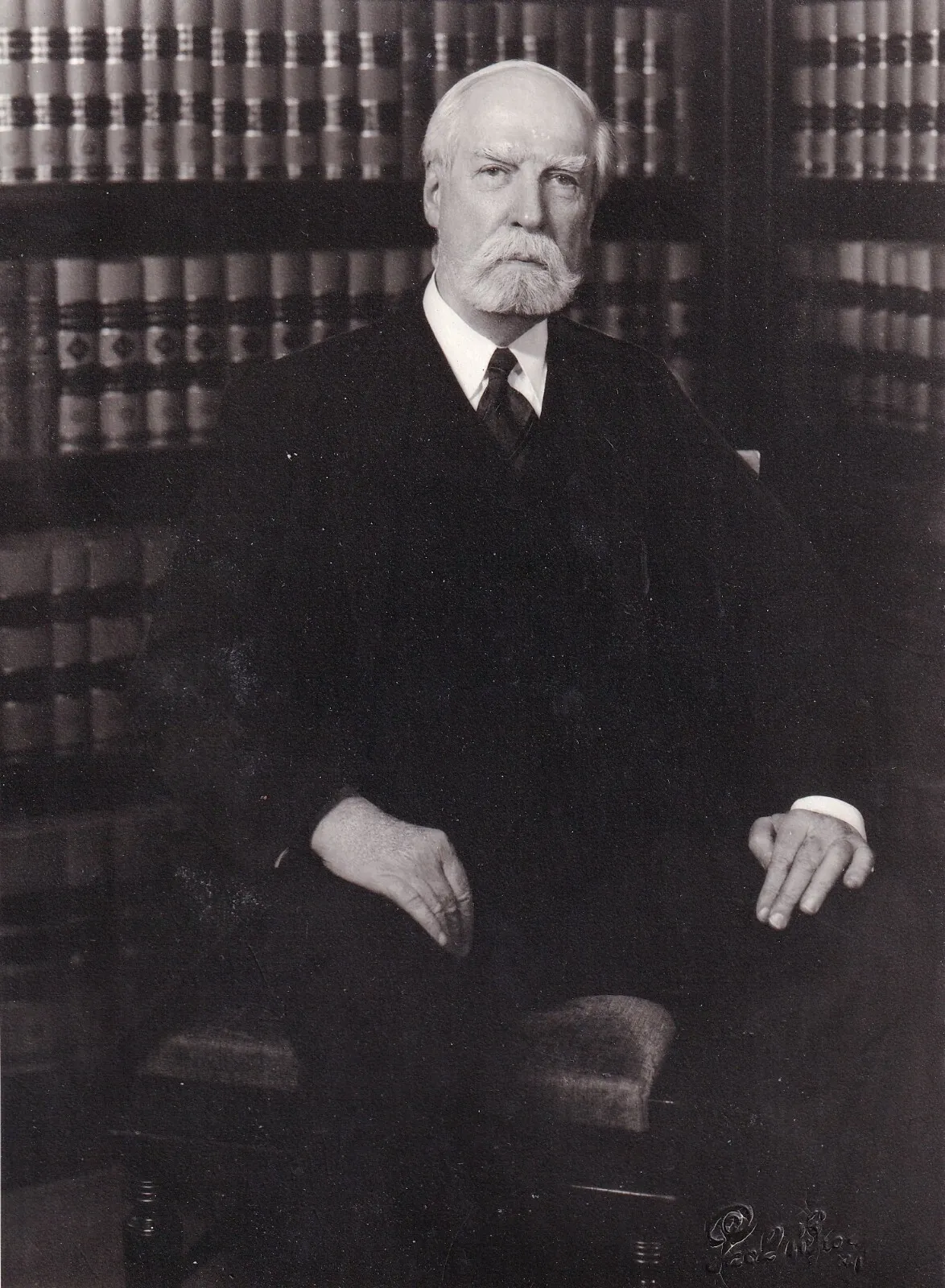 Photo: Charles Evans Hughes, via i.ebayimg.com
The four dissenters, led by Justice George Sutherland, recognized immediately what was happening. The majority had not interpreted the Contracts Clause — it had repealed it by judicial fiat. If a state legislature could impair contractual obligations whenever it declared an emergency serious enough to warrant intervention, the clause offered no protection at all, because every legislature in history has been willing to declare whatever emergency the moment required. Sutherland wrote that the Constitution's "meaning does not change with the ebb and flow of economic events."
 Photo: George Sutherland, via christianheritagefellowship.com
He was right. But he lost.
A Century of Exploitation
The Blaisdell framework — impairments are permissible if "reasonable" and directed at a "significant and legitimate public purpose" — is a test that almost any state legislature can satisfy with a halfway competent legal team. The result has been predictable. States have used the opening to restructure public pension obligations, retroactively alter the terms of municipal bonds, impose rent control regimes that rewrite landlord-tenant agreements, and expand regulatory burdens on industries in ways that effectively nullify contractual rights without triggering compensation.
The COVID-19 pandemic provided the most recent and vivid illustration. Multiple states imposed eviction moratoriums and debt-collection freezes that suspended contractual obligations between private parties for months or years. Landlords who had entered into lease agreements with enforceable payment terms found those terms unilaterally suspended by executive decree, with no compensation offered and no meaningful judicial remedy available. Courts, applying the Blaisdell standard, largely upheld these measures.
Pension restructuring offers an equally troubling pattern. When cities and states find themselves unable to meet pension obligations they voluntarily assumed — often because of political decisions made over decades — the temptation to retroactively alter those agreements is powerful. Detroit's 2013 bankruptcy, Puerto Rico's debt restructuring, and various state-level pension reform fights have all implicated the Contracts Clause, with courts generally permitting significant impairments provided the government articulates a sufficiently compelling fiscal rationale.
The Strongest Counterargument — and Why It Fails
The most serious defense of the Blaisdell approach is pragmatic: rigid enforcement of the Contracts Clause during genuine emergencies would prevent government from responding effectively to crises that the Founders could not have anticipated. A mortgage moratorium during the worst economic collapse in American history, the argument goes, was a proportionate and temporary response to extraordinary circumstances.
This argument has surface appeal, but it proves too much. Every expansion of government power in American history has been justified by the claim that current circumstances are uniquely severe and that constitutional constraints must bend accordingly. The question is not whether emergencies are real — they often are — but whether the Constitution's protections are conditional on the absence of hardship. If they are, they are not protections at all. The Framers understood this. They did not insert an emergency exception into the Contracts Clause because they knew that governments would always find emergencies when they wanted to override private rights.
Moreover, the Blaisdell standard has not, in practice, remained confined to genuine emergencies. It has become a general-purpose license for legislatures to revise private contractual arrangements whenever they decide that doing so serves a "significant" public purpose — which is to say, whenever they have the votes.
What a Revival Would Mean
A reinvigorated Contracts Clause would not prohibit all government regulation of economic activity. Courts have long distinguished between legislation that operates prospectively — setting the rules for future contracts — and legislation that retroactively alters existing agreements. The former is ordinary lawmaking; the latter is what the Contracts Clause was designed to prohibit. A court willing to enforce that distinction would not be engaging in radical judicial activism — it would be reading the text as written.
The practical implications would be significant. States seeking to restructure pension obligations would face genuine constitutional constraints, forcing honest accounting and prospective reform rather than retroactive impairment. Emergency eviction moratoria that suspend private lease terms would require compensation or face invalidation. The signal sent to private investors — that contracts made under state law will be honored as written — would strengthen rather than weaken economic confidence.
The broader implication is about constitutional culture. When foundational protections are eroded clause by clause, each erosion justified by the particular urgency of its moment, what remains is not a limited government constrained by law — it is an unlimited government constrained only by its own political calculations.
A constitution that means what it says only in good times is not a constitution at all.