The Electoral College Is the Republic's Firewall — And the Campaign to Dismantle It Is Further Along Than You Think
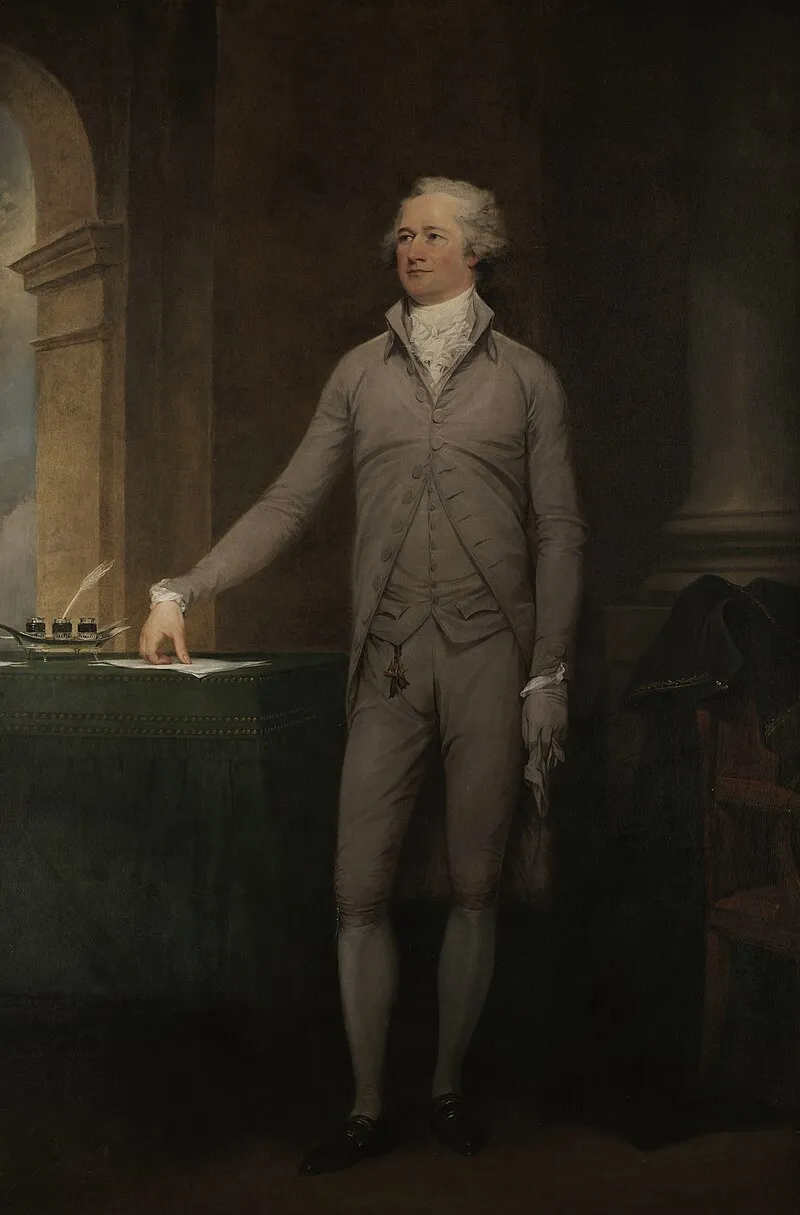
Photo of Alexander Hamilton, via Wikimedia Commons
The Quiet Campaign Nobody Is Talking About
Most Americans are not aware that a coordinated effort to functionally abolish the Electoral College — without a constitutional amendment — is already well underway. The National Popular Vote Interstate Compact (NPVIC) is an agreement among participating states to award all of their Electoral College votes to whichever presidential candidate wins the national popular vote, regardless of how their own state voted. As of mid-2025, states representing a combined 209 electoral votes have signed on. The Compact activates when participating states reach the 270-vote threshold required to elect a president.
That threshold has not yet been crossed. But the gap is closing. And the mechanism is deliberately designed to circumvent the constitutional amendment process — because proponents know they cannot get 38 states to ratify a formal change to Article II. So instead, they are engineering the same outcome through a state-level workaround, relying on the fact that the Constitution grants states the authority to determine how they allocate their electors.
This is not a fringe academic exercise. It is a live political strategy with real legislative momentum in blue-state capitals, and it deserves far more scrutiny than it is currently receiving from a media class that largely supports its goals.
Why the Founders Built What They Built
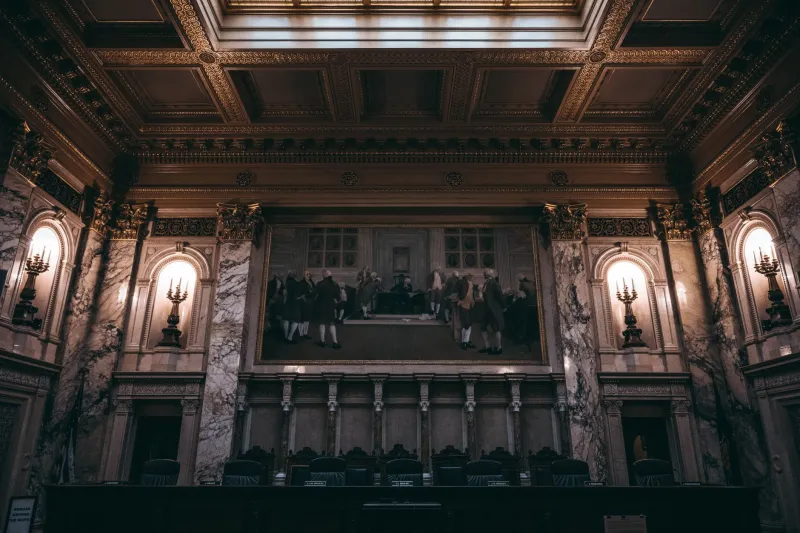
The Electoral College was not an accident, a compromise of convenience, or a relic of slavery — as its critics routinely claim. It was a carefully reasoned solution to a specific and difficult problem: how do you elect a chief executive in a republic composed of sovereign states with vastly different populations, economies, and interests, without allowing the most populous regions to permanently dominate everyone else?
The Founders had studied history. They knew what happened in direct democracies when factions gained numerical dominance — Athens being only the most famous cautionary tale. They also understood that the United States was not a single undifferentiated nation but a union of distinct political communities, each with legitimate interests that deserved representation in the selection of the executive.
The result was a system that requires presidential candidates to build genuinely national coalitions. To win the presidency, a candidate must carry states — not simply rack up margins in population-dense coastal cities. That design forces engagement with farmers in Iowa, manufacturers in Ohio, energy workers in Pennsylvania, and retirees in Arizona. It distributes political attention across the map in a way that a pure popular vote never would.
Alexander Hamilton defended the Electoral College in Federalist No. 68 on precisely these grounds, arguing that the selection of the executive should involve "men most capable of analyzing the qualities adapted to the station" drawn from across the republic, insulated from the passions of a single national majority. The specific mechanics have evolved — the rise of the popular vote for electors, the winner-take-all norm in most states — but the core federalist logic remains intact and sound.
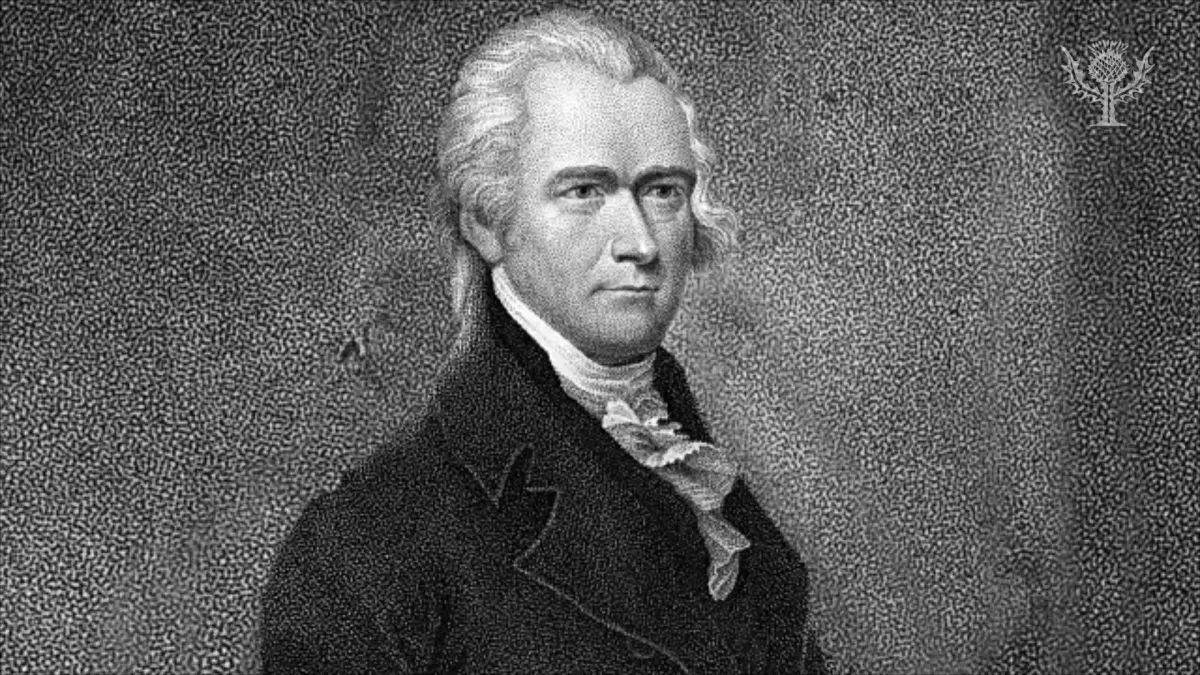 Photo: Alexander Hamilton, via cdn.britannica.com
The Strongest Case for the Popular Vote — Answered Directly
The most intellectually honest argument for abolishing the Electoral College is simple: in a democracy, every citizen's vote should carry equal weight. Why should a voter in Wyoming have more mathematical influence per capita over the outcome than a voter in California? The answer cannot simply be "because the Founders said so" — constitutional design must be justified on its merits.
It is a fair question, and it deserves a serious answer rather than a dismissal.
The premise — that equal individual voting weight is the supreme value in a presidential election — is contestable on its own terms. The United States is a federal republic, not a unitary democracy. The Senate gives Wyoming the same two votes as California, not because the Founders miscounted, but because the Senate was designed to represent states as political units. The Electoral College reflects the same logic applied to the executive branch: the president is elected by the nation, but the nation is understood as a union of states, not an undifferentiated mass of individual voters.
More practically: a pure national popular vote would not produce equality — it would produce a radical concentration of power. Under that system, presidential campaigns would rationally ignore every low-density state in the country and invest almost entirely in maximizing turnout in New York, Los Angeles, Chicago, Houston, and a handful of other metropolitan areas. Voters in rural America, small states, and the interior of the country would become politically irrelevant. The map would shrink from 50 states to roughly 10 major urban media markets.
The Electoral College does not give rural voters more power than they deserve. It prevents urban voters from having so much power that everyone else disappears from the political calculus entirely. That is not an injustice — it is federalism functioning as designed.
The NPVIC's Constitutional Problems
Beyond the policy argument, the Compact itself raises serious constitutional questions that have not been adequately adjudicated. Article I, Section 10 of the Constitution requires congressional consent for interstate compacts that affect the balance of power between states and the federal government. The NPVIC's proponents argue that no such consent is required because it merely governs how states allocate their own electors. Critics — including several serious constitutional law scholars — argue that a compact explicitly designed to override the practical effect of the Electoral College for the entire country is precisely the kind of agreement the Compact Clause was meant to regulate.
There is also the question of what happens when a participating state votes heavily for Candidate A, but the national popular vote goes to Candidate B. Under the Compact, that state's electors would be required to vote against the expressed preference of their own citizens. Whether that creates a due process or equal protection problem for those voters has never been tested in court — because the Compact has never been triggered. If it ever reaches 270 electoral votes and is actually implemented, the litigation will be immediate, expensive, and deeply destabilizing.
What This Signals for 2028 and Beyond
The NPVIC is a long game, and its proponents are patient. The Compact has been gaining state endorsements for nearly two decades, and its advocates are explicitly targeting the remaining states needed to reach 270. Several states with competitive legislatures — including Minnesota, Nevada, and others — have seen NPVIC legislation introduced in recent sessions.
For conservatives, the lesson is straightforward: the Electoral College is not safe simply because it is in the Constitution. The Blaisdell precedent should be a warning — constitutional protections can be eroded through creative legal architecture without ever formally amending the text. The NPVIC is attempting exactly that maneuver with the presidential election system.
The response cannot be passive. Congressional Republicans should introduce legislation explicitly withholding consent for the Compact under the Compact Clause. State legislatures in red and purple states should pass resolutions affirming their commitment to the existing system. And conservative legal organizations should be preparing the litigation infrastructure to challenge the Compact the moment it reaches activation threshold.
The Electoral College is not a technicality. It is the mechanism that makes the presidency genuinely national — and dismantling it would permanently tilt every future election toward the densest population centers in the country.
The Verdict
The Electoral College was not designed to make elections easy — it was designed to make the republic durable, and the people who want to abolish it know exactly what they would replace it with.