Article I's Forgotten Firewall: How the Contracts Clause Became a Dead Letter — and Why States Are Paying the Price in Broken Promises

The Clause Nobody Quotes Anymore
Article I, Section 10 of the United States Constitution is blunt: "No State shall… pass any… Law impairing the Obligation of Contracts." Eleven words. No ambiguity. No asterisks. The Founders did not insert this language as a rhetorical flourish — they inserted it because they had lived through the consequences of its absence. In the years following the Revolution, state legislatures across the young republic had systematically destroyed private credit markets by passing debtor-relief laws, inflating currency, and retroactively voiding financial obligations. The Contracts Clause was their remedy: a constitutional wall between political convenience and economic liberty.
Today, that wall has been reduced to rubble — and most Americans have no idea it ever existed.
What the Founders Were Actually Afraid Of
To understand why the Contracts Clause mattered, you have to understand the world that produced it. Between 1783 and 1787, state legislatures were, in Madison's words in Federalist No. 44, engaged in a sustained assault on private contracts. Creditors could not collect lawful debts. Lenders stopped lending. Investment dried up. The economic chaos of the Confederation period was not merely an abstraction — it was a lived catastrophe that threatened to dissolve the union before it had properly formed.
Madison was explicit about the clause's purpose. It was designed, he wrote, to prevent the "fluctuating policy" of state governments from overriding legitimate financial commitments. The Founders understood something that modern progressives refuse to accept: when government can rewrite contracts retroactively, property rights become meaningless. If you cannot rely on an agreement being honored, you cannot plan, invest, or build. Economic liberty and contract enforcement are not separate issues — they are the same issue.
The 1934 Betrayal
For nearly 150 years, the Contracts Clause functioned more or less as intended — imperfectly, but as a genuine constitutional constraint. Then came the Great Depression, and with it, the Supreme Court's landmark capitulation in Home Building & Loan Association v. Blaisdell (1934).
Minnesota, facing a wave of mortgage foreclosures, passed a law allowing courts to extend the redemption period on foreclosed properties — effectively rewriting the terms of existing mortgage contracts. The Supreme Court, in a 5-4 decision authored by Chief Justice Charles Evans Hughes, upheld the law. Hughes's reasoning was breathtaking in its circularity: the Constitution must be interpreted in light of the "conditions" facing the nation, and in an emergency, the state's police power could override contractual obligations.
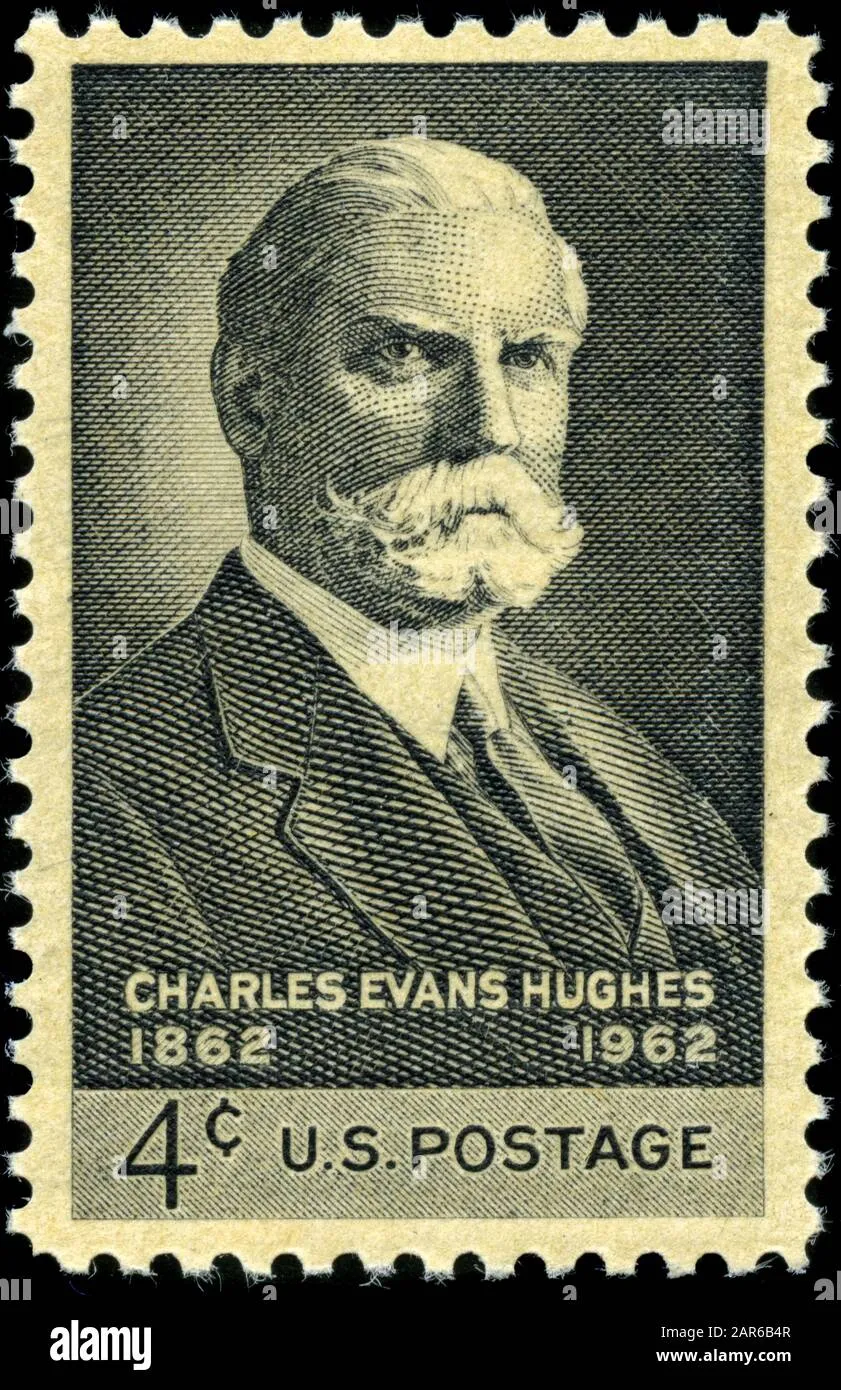 Photo: Charles Evans Hughes, via c8.alamy.com
Justice George Sutherland's dissent was prophetic. He warned that a constitution whose meaning changes with economic circumstances is no constitution at all. "If the provisions of the Constitution be not upheld when they pinch as well as when they comfort," Sutherland wrote, "they may as well be abandoned." History has vindicated him completely.
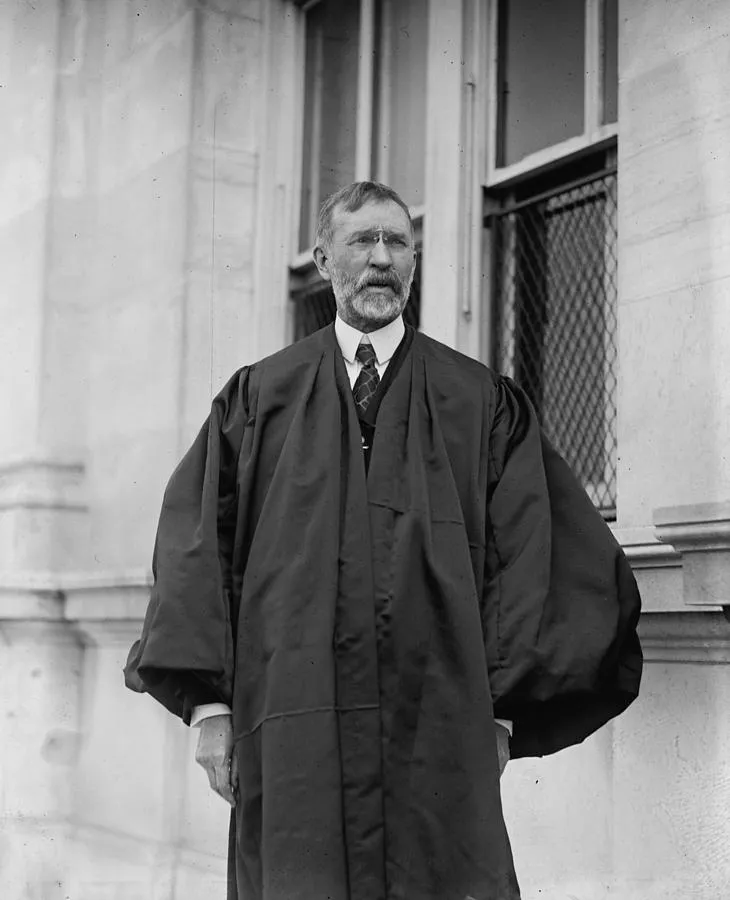 Photo: George Sutherland, via images.fineartamerica.com
The Modern Consequence: States Breaking Pension Contracts
The practical legacy of Blaisdell is a legal environment in which states can — and regularly do — retroactively alter contractual commitments to public employees, private regulated entities, and bondholders. The most visible modern battleground is public pensions.
States including Illinois, New Jersey, Kentucky, and California have faced fiscal crises driven in part by decades of underfunded pension obligations. When the bills came due, some state officials floated proposals to reduce already-earned pension benefits — benefits that, in many states, are explicitly contractual under state law. The legal battles that followed produced inconsistent outcomes precisely because the federal Contracts Clause, which might have provided a uniform national standard, has been judicially neutered.
Illinois presents perhaps the starkest case. Its state constitution contains its own pension protection clause, but even that has been subject to ongoing political and legal pressure. The broader national picture is a patchwork: some states honor their commitments, others look for escape routes, and the federal constitutional backstop that the Founders designed for exactly this scenario is largely unavailable.
Beyond pensions, the eviscerated Contracts Clause enables states to rewrite regulatory agreements with businesses — altering the terms under which companies made investment decisions — and to modify bond covenants in ways that harm creditors. The common thread is government escaping the consequences of its own commitments on the theory that current political needs outweigh prior legal obligations.
The Strongest Counterargument — and Why It Fails
The most intellectually serious defense of Blaisdell and its progeny is the argument from democratic flexibility: legislatures must be able to respond to changing circumstances, and rigid contract enforcement could produce economic catastrophe in genuine emergencies. This is not a frivolous concern. The Depression-era mortgage crisis was real, and the human suffering it produced was severe.
But the argument proves too much. Every government that has ever broken a contract has done so citing necessity. The Founders knew this — they had watched their own state legislatures do exactly that under the Articles of Confederation, always with justifications that sounded reasonable in isolation. The entire point of a constitutional clause is that it binds even when compliance is costly. A Contracts Clause that yields to emergency conditions is not a constitutional protection; it is a suggestion that disappears precisely when it is most needed.
Moreover, the Blaisdell framework did not actually require that emergency conditions be genuine, severe, or temporary. The standard it created — a mushy balancing test weighing the "significance" of the impairment against the "importance" of the state's interest — is so permissive that it has functioned as a near-blanket exemption. Courts applying the post-Blaisdell standard almost never strike down state contract impairments. The constitutional protection has become nominal.
What Genuine Restoration Would Look Like
A return to the Contracts Clause's original force would not require radical jurisprudence — it would require the Supreme Court to do what it has done with other constitutional provisions: read the text as written and hold the government to its plain meaning. The clause does not say "No State shall impair the Obligation of Contracts unless circumstances seem sufficiently dire to five justices." It says no state shall impair them.
At minimum, the Court should abandon the permissive balancing test in favor of a presumption of unconstitutionality for retroactive contract impairments, rebuttable only by a showing of truly extraordinary and narrowly tailored necessity. That is not radicalism — it is textualism applied consistently.
Until that happens, state governments will continue to treat their own legal commitments as optional, and the citizens and investors who relied on those commitments will continue to bear the cost. That is not a constitutional system. It is a system in which government makes promises it never intends to keep — and then dresses the betrayal up in legal language.
The Contracts Clause was the Founders' guarantee that American government would be bound by the same rules it imposed on everyone else — and until the Supreme Court rediscovers the courage to enforce it, that guarantee remains the Constitution's most consequential broken promise.