The Establishment Clause Was Written to Free Religion, Not Erase It — Courts Have It Backwards

In the summer of 2022, the Supreme Court handed down a ruling in Kennedy v. Bremerton School District that should have been unremarkable. A high school football coach had quietly prayed on a public school field after games. He lost his job for it. The Court, in a 6–3 decision authored by Justice Neil Gorsuch, ruled that the school district had violated both the Free Exercise Clause and the Free Speech Clause of the First Amendment. What was striking was not the outcome — it was how much legal ground had to be recaptured to get there. For nearly seventy years, American courts had been operating under a constitutional framework so distorted that a man kneeling in silent, voluntary prayer could be treated as a constitutional crisis.
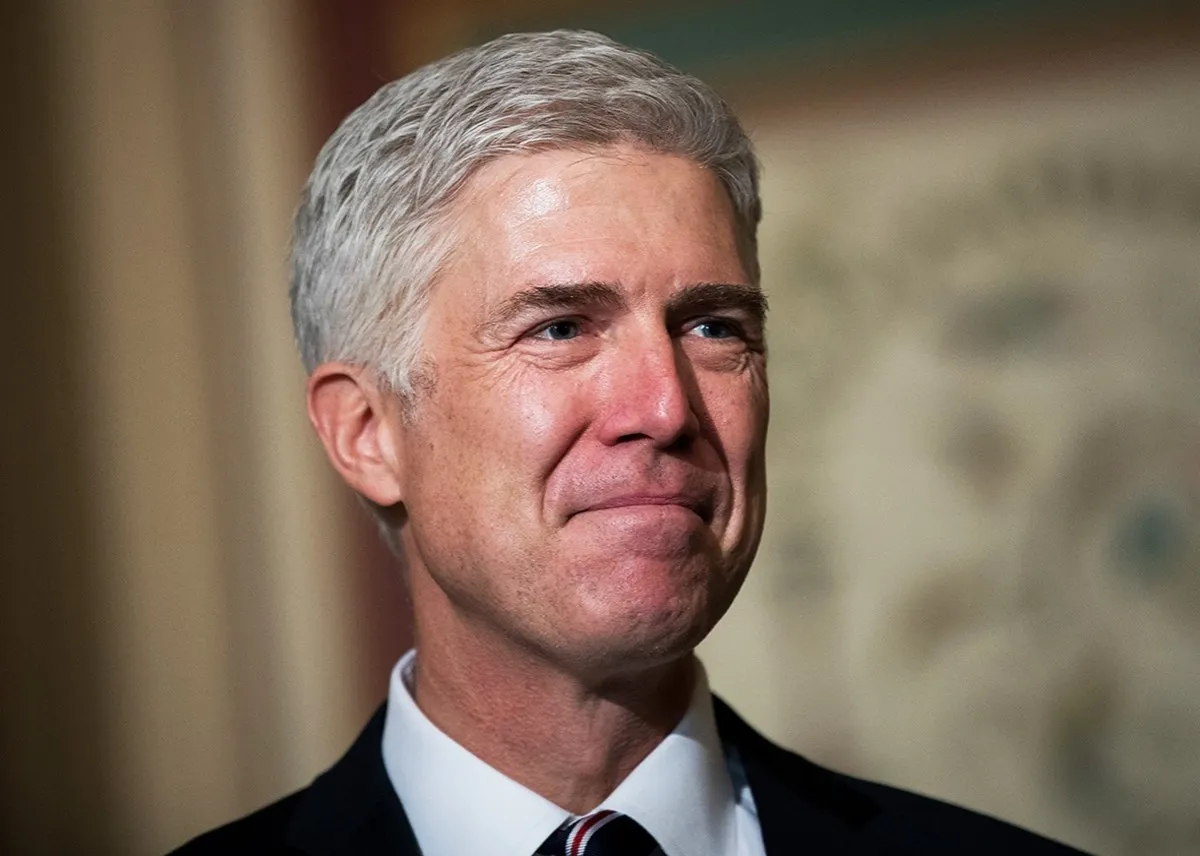 Photo: Neil Gorsuch, via images.saymedia-content.com
That distortion did not happen by accident. It happened because the Establishment Clause — sixteen words originally designed to prevent Congress from establishing a national church — was gradually transformed into something the Founders would not recognize: a one-way exclusion zone for religious expression in public life.
What the Founders Actually Wrote — and Why It Matters
The First Amendment's Establishment Clause reads simply: "Congress shall make no law respecting an establishment of religion." The operative word is Congress. The clause was written in the immediate aftermath of a colonial experience in which the Church of England held coercive legal authority. Several states had their own established churches at the time of ratification. The Founders' concern was not that a schoolteacher might pray before a football game. Their concern was that the new federal government might designate a single denomination as the official church of the United States and use state power to enforce conformity.
James Madison, the clause's principal architect, was explicit in his Memorial and Remonstrance Against Religious Assessments that religion flourishes best when government leaves it alone — not when government actively suppresses it. The Establishment Clause was, at its core, a structural protection for religious pluralism, not a mandate for secular governance.
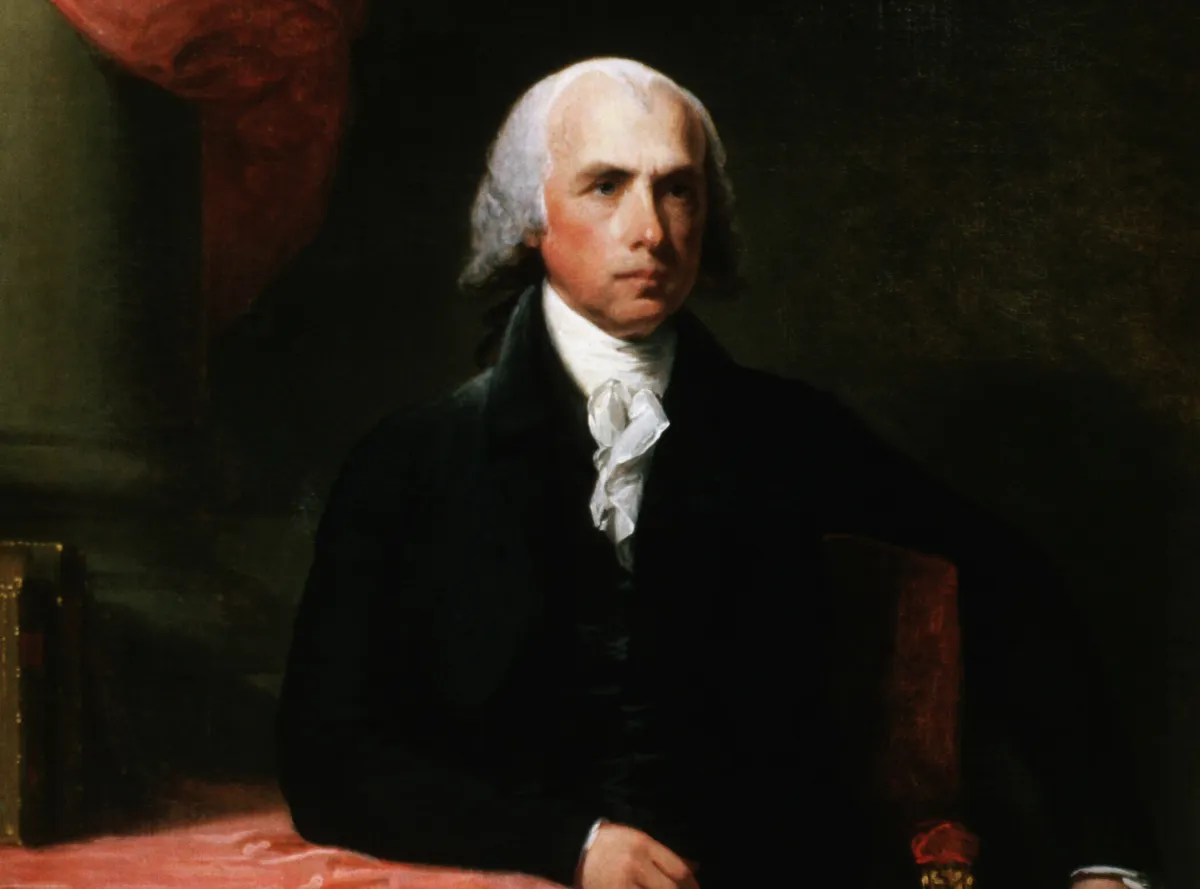 Photo: James Madison, via substack-post-media.s3.amazonaws.com
How Everson Opened the Door
The jurisprudential drift began in earnest with Everson v. Board of Education (1947), in which the Supreme Court incorporated the Establishment Clause against the states for the first time — a significant enough move in itself — but also introduced Thomas Jefferson's phrase "wall of separation between church and state" as if it were constitutional text. It is not. Jefferson's phrase comes from a private letter written in 1802 to the Danbury Baptist Association. It does not appear in the Constitution, the Bill of Rights, or any founding-era legal document. Yet Everson planted it at the center of Establishment Clause jurisprudence, where it has functioned ever since as a rhetorical battering ram against public religious expression.
From that foundation, the Court constructed increasingly aggressive tests. The Lemon test, born from Lemon v. Kurtzman (1971), required that any government action have a secular purpose, neither advance nor inhibit religion, and avoid excessive entanglement with religion. In practice, the test became a litigation weapon for secularist organizations like the ACLU and Americans United for Separation of Church and State, who used it to challenge everything from nativity scenes on courthouse lawns to the words "under God" in the Pledge of Allegiance. The mere presence of religious symbolism in a public space became legally suspect.
The Asymmetry at the Heart of the Problem
Here is the constitutional absurdity that three generations of distorted precedent produced: a government that actively promotes secular ideology — through public school curricula, through taxpayer-funded gender ideology programs, through mandatory diversity training — faces no Establishment Clause scrutiny whatsoever. But a city that allows a menorah in a public park, or a school district that permits a student-led Bible club to meet after hours, risks federal litigation.
This asymmetry is not neutrality. It is preference — for secularism over faith, dressed up in constitutional language. The strongest version of the opposing argument holds that any government accommodation of religion, however voluntary and non-coercive, risks making non-believers feel excluded or pressured. That concern deserves a hearing. But the answer to that concern cannot be the wholesale removal of religious expression from civic life, because that outcome does not produce a neutral public square — it produces a public square with an officially secular character. Replacing one establishment with another is not what the First Amendment demands.
Kennedy and the Correction Underway
The Kennedy decision signaled that the current Court understands this asymmetry and is working to correct it. Justice Gorsuch's majority opinion explicitly buried the Lemon test, replacing it with a historical and traditional analysis — asking whether a challenged practice resembles something the Founders would have recognized as an establishment of religion. A coach praying voluntarily on a football field does not. A government-mandated church does.
Similarly, in Carson v. Makin (2022), the Court ruled that Maine could not exclude religious schools from a school-choice tuition program that funded private secular schools. The principle was straightforward: government neutrality toward religion means you cannot single out religious institutions for exclusion from generally available public benefits. That is discrimination, not neutrality.
These decisions represent a return to what constitutional scholars like Michael McConnell have long argued: that the Establishment Clause and the Free Exercise Clause must be read together, as complementary protections for religious liberty, not as competing forces in which one always defeats the other.
What True Constitutional Neutrality Looks Like
Genuine neutrality under the First Amendment means the government neither coerces religious practice nor punishes it. It means a student can pray at graduation without the school being held liable. It means a coach can kneel on a field without losing his livelihood. It means a faith-based organization can compete for government contracts on equal footing with secular nonprofits. It does not mean every public space must be scrubbed of any reference to the religious convictions that shaped this nation's founding documents, its legal traditions, and its moral vocabulary.
The secularist interpretation has always rested on a false premise — that removing religion from public life is a neutral act. It is not. It is a choice, with winners and losers. And for too long, the losers have been the tens of millions of Americans whose faith is not a private hobby but a central feature of their identity and their civic participation.
The Establishment Clause was written to guarantee that the government could not tell you what to believe. It was never written to guarantee that you would never have to see evidence that your neighbor believes something different.
The First Amendment's religion clauses were designed to protect faith from government — and it is long past time the courts stopped using them to protect government from faith.