The Logan Act: A 225-Year-Old Statute That Has Never Convicted Anyone — Yet the Government Keeps Reaching for It
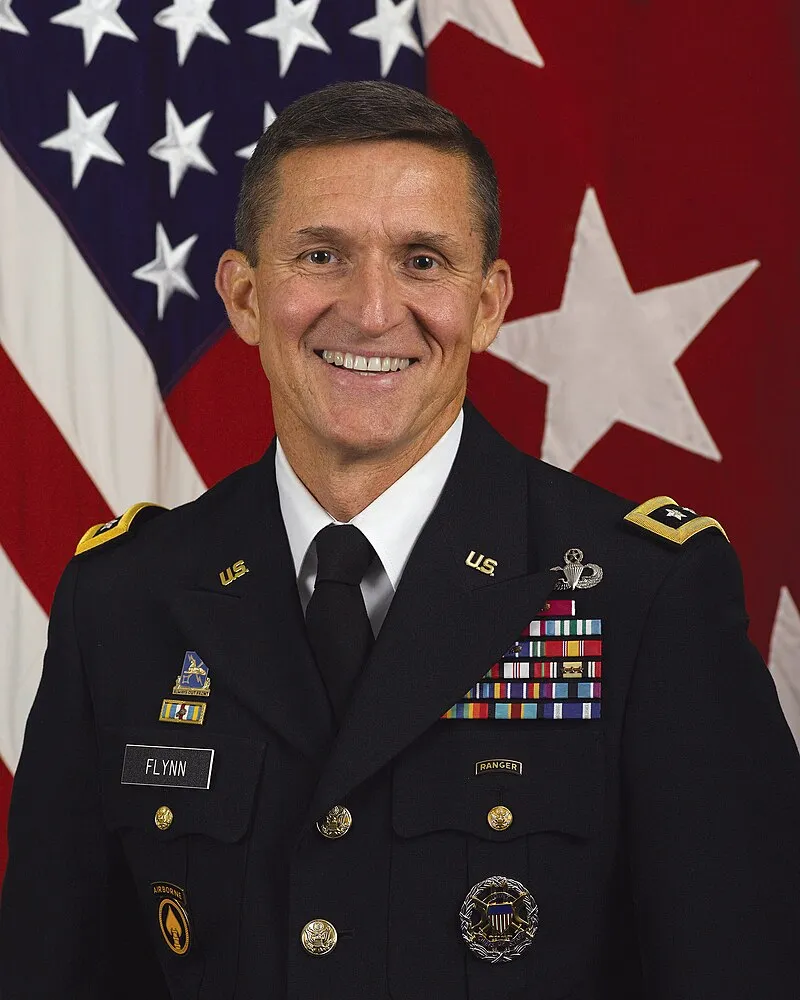
Photo of Michael Flynn, via Wikimedia Commons
In December 2016, General Michael Flynn — a decorated combat veteran and the incoming National Security Advisor to President-elect Donald Trump — spoke by phone with Russian Ambassador Sergey Kislyak. The call was routine by any reasonable diplomatic standard: a senior member of a presidential transition team making contact with foreign counterparts before taking office. What happened next was anything but routine. FBI agents, operating under the direction of senior officials who had already concluded Flynn had committed no crime, were instructed to interview him anyway. The legal theory floated internally to justify the investigation? A potential violation of the Logan Act.
The Logan Act. A law passed in 1799. A law that has never produced a single successful criminal conviction in 225 years. A law so constitutionally suspect that most serious legal scholars treat it as a historical curiosity rather than an enforceable statute. The fact that federal law enforcement officials invoked it — even informally, even as a pretext — against a man who was days away from becoming one of the most senior national security officials in the United States government tells you almost everything you need to know about how political weaponization works inside the administrative state.
Where the Logan Act Came From
The law's origins are worth understanding because they illuminate how far its modern usage has drifted from its original purpose. In 1798, a Pennsylvania Quaker named George Logan traveled to France on a self-appointed peace mission during the Quasi-War — an undeclared naval conflict between the United States and the French Republic. Logan had no government authorization and no official standing. His freelance diplomacy, however well-intentioned, created genuine confusion about American foreign policy at a moment of acute national crisis.
 Photo: George Logan, via ctmirror.org
Congress responded by passing what became 18 U.S.C. § 953, which prohibits any U.S. citizen from engaging in unauthorized correspondence or intercourse with a foreign government with intent to influence that government's conduct in relation to disputes with the United States. The penalty: a fine and up to three years in prison.
In the 225 years since, the federal government has managed exactly two indictments under the Logan Act — one in 1803 and one in 1852 — neither of which resulted in a trial, let alone a conviction. That is the statute's entire prosecution record. For comparison, there are federal laws against impersonating Smokey Bear (18 U.S.C. § 711) that have been enforced more recently.
The Constitutional Problems Are Substantial
The Logan Act's near-total dormancy is not an accident. Legal scholars across the ideological spectrum have identified serious constitutional deficiencies that make any prosecution under the statute a high-risk venture.
The most significant problem is vagueness. The First and Fifth Amendments require that criminal statutes define prohibited conduct with sufficient clarity that ordinary citizens can understand what is forbidden. The Logan Act's prohibition on "correspondence or intercourse" with a foreign government "with intent to influence" its conduct is extraordinarily broad. Under a literal reading, an American academic who writes a paper arguing that China should change its trade policy, or a businessman who lobbies a foreign minister on a regulatory matter, could theoretically fall within its scope. Courts have long held that vague criminal statutes are unconstitutional because they vest prosecutors with effectively unlimited discretion to decide whom to charge — precisely the kind of arbitrary government power the Fifth Amendment's Due Process Clause was designed to prevent.
There is also a serious First Amendment dimension. Private citizens communicating with foreign governments on matters of public policy are engaged in political speech — the category of expression the First Amendment protects most robustly. Criminalizing such speech based on its content and intent, without a clear and narrowly drawn standard, sits uneasily with decades of free speech jurisprudence.
Finally, there is the structural question of whether the executive branch's exclusive constitutional authority over foreign affairs — rooted in Article II — can be used to criminalize speech by private citizens who are not purporting to exercise governmental power. The Founders were deeply suspicious of speech-based criminal prosecutions by the federal government; the Alien and Sedition Acts of 1798, passed the same year as the Logan Act, were widely condemned and ultimately repealed or allowed to expire precisely because of that suspicion.
The Flynn Episode and What It Revealed
The Flynn investigation exposed the Logan Act's transformation from legal relic to political tool with unusual clarity, in part because internal FBI communications subsequently made public through litigation and congressional oversight showed the law being discussed not as a genuine prosecutorial theory but as a mechanism to justify continued surveillance and investigation of a political opponent.
Declassified notes from senior FBI officials, reviewed by congressional investigators, showed explicit discussion of whether the Logan Act could be used to sustain the Flynn investigation after agents had concluded he had not lied to them — a conclusion that was itself later reversed under political pressure. Special Counsel Robert Mueller's team ultimately charged Flynn not under the Logan Act but with making false statements to federal investigators — a charge to which Flynn initially pleaded guilty before withdrawing the plea, in a legal saga that dragged on for years.
The point is not whether Flynn was treated fairly or unfairly in the totality of that prosecution — reasonable people have reached different conclusions. The point is that the Logan Act was raised internally as a potential legal hook at a moment when investigators were looking for reasons to continue scrutinizing a political transition they apparently viewed with suspicion. That is not law enforcement. That is legal architecture being scavenged for parts.
The Selective Enforcement Problem
If the Logan Act were applied consistently, its target list would be long and bipartisan. Former President Jimmy Carter conducted extensive private diplomacy with foreign governments throughout his post-presidency, including trips to North Korea and Hamas-controlled Gaza. The late Senator Ted Kennedy was reported to have sent private communications to Soviet leadership during the Reagan administration. Countless former officials, academics, and business leaders engage in informal back-channels with foreign governments as a routine feature of American civic life.
None of them faced Logan Act scrutiny. The law has been invoked as a threat precisely and exclusively when it served the immediate political interests of those doing the invoking — which is the textbook definition of selective enforcement, and one of the clearest violations of the equal protection principles embedded in the Fifth Amendment's due process guarantee.
What an Originalist Framework Demands
From an originalist standpoint, the Logan Act presents a straightforward problem: it is a vague, speech-restrictive, selectively enforced criminal statute that has never been tested in court precisely because no prosecutor has ever been confident enough in its constitutionality to take it to trial. The Founders' hostility to general warrants, vague criminal laws, and prosecutorial discretion unconstrained by clear legal standards was not incidental to their constitutional design — it was central to it. A statute that sits unused for 225 years but is periodically waved at political adversaries as a threat represents exactly the kind of arbitrary governmental power they built the Bill of Rights to prevent.
Congress should repeal the Logan Act, or at minimum substantially rewrite it with clear, narrow definitions of prohibited conduct and a meaningful intent standard. Absent that, federal courts should be prepared to strike it down on vagueness grounds the moment any prosecutor is reckless enough to actually bring a case.
A law that has never won a conviction in two centuries is not a law — it is a threat, and the only people it has ever been used to threaten are the government's political enemies.